


Henan Zhengnai New Materials Co., Ltd. is a professional petroleum fracturing proppant manufacturer in Henan Province, with the factory based at No. 90 Weisan Road, Wen County Industrial Cluster Area, Jiaozuo City, covering an area of more than 65,000 square meters, and a sales service company set up in Zhengzhou City. Its registered capital is RMB50 million and it has more than 200 employees. Henan Zhengnai adheres to the strategy of "promoting enterprises through science and technology" and has currently obtained 6 invention patents and 19 utility model patents authorized by the Patent Office of the State Intellectual Property Office.
Quality Guaranteed
Zheng Nai Petroleum's fracturing proppant products fully comply with the standards of the American Stim-Lab, and the British Frac-tech laboratory etc. The product performance has reached the international leading level and passed American Petroleum Institute APIQ1 certification. And we has passed the national laboratory accreditation CNAS certification. Recognized as a first-level material supplier by PetroChina and Sinopec, the company's products have been widely used in various domestic oil and gas fields.
Professional Team
The company has advanced laboratory facilities and has established strong partnerships with well-known companies, creating an ideal environment for continuous innovation and research and development. This collaborative approach enables the company to always stay at the forefront of technological advancement and maintain a competitive advantage in the industry.
Leading Service
Our team is dedicated to providing a one-stop service that addresses all your needs and concerns. We go above and beyond to resolve any issues you may face. Don't hesitate to reach out to us for assistance.
Widely sold
Recognized as a first-level material supplier by PetroChina and Sinopec, the company's products have been widely used in various domestic oil and gas fields, especially PetroChina Southwest Oil and Gas Field, Changqing Oil Field, Xinjiang Oil Field, Jilin Oil Field, Sinopec North China Oil Field, Shengli Oil Field, Yanchang Oil, China-Australia Coalbed methane and other users. The products are exported to the United States, Kazakhstan, Ukraine, Brazil and other countries, and are recognized and praised by customers.

A proppant is a solid material, typically sand, treated sand or man-made ceramic materials, designed to keep an induced hydraulic fracture open, during or following a fracturing treatment, most commonly for unconventional reservoirs. It is added to a fracking fluid which may vary in composition depending on the type of fracturing used, and can be gel, foam or slickwater–based. In addition, there may be unconventional fracking fluids. Fluids make tradeoffs in such material properties as viscosity, where more viscous fluids can carry more concentrated proppant; the energy or pressure demands to maintain a certain flux pump rate (flow velocity) that will conduct the proppant appropriately; pH, various rheological factors, among others. In addition, fluids may be used in low-volume well stimulation of high-permeability sandstone wells (20 to 80 thousand US gallons (76 to 303 kl) per well) to the high-volume operations such as shale gas and tight gas that use millions of gallons of water per well.

Ceramsite sand has high fracturing strength and is mainly used for underground support in oil fields to increase the production of oil and natural gas. It is an environmentally friendly product. This product uses various raw materials such as high-quality bauxite and coal, and is sintered with ceramics. It is a substitute for medium and low-strength proppant such as natural quartz sand, glass balls, and metal balls. It has a good effect on increasing oil and natural gas production.
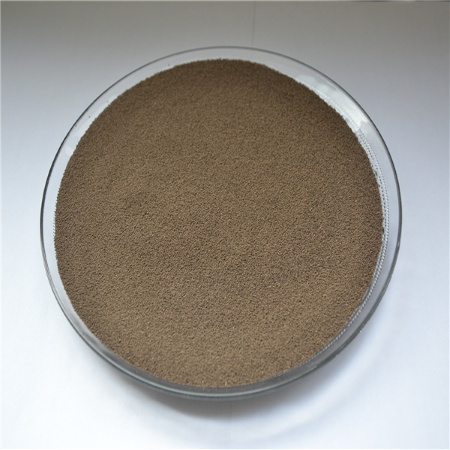
Petroleum fracturing proppant is an important material used in the oil and gas extraction process. Its main function is to support artificial fractures during the hydraulic fracturing process to increase the production of oil and gas wells.
The new Ultra-High Stress Proppant (UHSP) features a highly round and spherical shape with a mono-sized sieve distribution, ensuring higher proppant pack porosity and increased flow space at elevated stresses. Its smooth surface reduces Beta and erosion potential, while its extremely low internal pellet porosity distributed in fine pores results in stronger grains, with a crush value of less than 2% at 20,000 psi for a 20/40 mesh product.
This technology enhances durability and longevity, significantly reducing erosion on downhole tools and equipment. The manufacturing technique applied to typically low-density ceramic ores produces a proppant with equal or better conductivity than standard intermediate and high-density ceramics, leading to larger frac volumes and improved carrying capacity. This new low-density ceramic can replace conventional ceramics across low to high-stress applications, often reducing associated costs with higher density proppants.
Types of High Strength Proppant
Silica frac sand proppants
Silica frac sand is the preferred material for well production in the oil and gas industry. Silica withstands significant forces while remaining chemically stern because it's made of high-quality silica quartz. Silica frac sand proppants can typically withstand forces up to 6,000 psi; however, there are many cases where proppants are required to withstand even greater pressures.
Ceramic proppants
Ceramic proppants are popular because they offer superior strength under the high pressures of deep formations and can withstand higher pressure than silica sand. Ceramic proppants typically endure forces up to 10,000 psi. Although they're more expensive, ceramic proppants are available in a wider selection of grain sizes and boast a higher conductivity than natural frac sand. Many ceramic proppants are made from sintered bauxite, kaolin, magnesium silicate, or blends of bauxite and kaolin. Ceramic proppants are made in the following process: crushing, pelletizing, drying, sintering, cooling.
Resin-coated proppants
Resin-coated sand proppants have been popular in fracing for decades because of their ability to form a pack within fractures. Fracturing fluid and resin-coated proppants complement each other for optimized well completion. There are two main types of resin-coated materials: curable: Curable resin chemically reacts with other fracturing fluids, which allows the resin to bind together and prevents materials from flowing back into the wellbore. Pre-cured resin: Pre-cured resin is fully cured before being injected into the fracture, making it highly resistant to crushing and interaction with other chemicals in the well.
Cost effectiveness
Using proppants can be more cost-effective than traditional drilling methods, allowing companies to extract more oil and natural gas from a single well. This efficiency stems from the ability of proppants to create and maintain fractures in the rock formations surrounding the wellbore, thus enhancing permeability and fluid flow. By maximizing the output from each well, proppants not only reduce the need for additional drilling but also lower overall operational costs. This makes them an attractive option for energy companies looking to optimize their production processes while minimizing expenses.
Improved safety
Proppants can make hydraulic fracturing safer by reducing the risk of blowouts and other accidents. This enhanced safety is achieved through the stabilization of fractures created during the fracturing process, preventing unwanted closures that could lead to dangerous pressure build-ups. By maintaining open pathways for oil and gas to flow, proppants help manage subsurface pressures more effectively, thereby decreasing the likelihood of sudden releases or equipment failures. Additionally, their use contributes to a more controlled and predictable fracturing operation, further minimizing hazards associated with high-pressure injections.
Greater control over fracing
Proppants allow for greater control over the fracing process, enabling companies to precisely target specific areas of a rock formation and optimize the extraction of oil and natural gas. This targeted approach not only maximizes resource recovery but also enhances overall efficiency by focusing efforts on the most productive zones within the reservoir. By tailoring the fracturing treatment to these selected intervals, proppants help ensure that each fracture is effectively created and sustained, leading to improved permeability and increased hydrocarbon flow. This level of precision in the fracing operation ultimately translates into higher yields and better economic outcomes for energy producers.
Low water absorption, good frost resistance and durability
Ceramsite concrete is better than ordinary concrete in acid and alkali corrosion resistance and frost resistance. The strength loss of No. 250 fly ash ceramsite concrete after 15 freeze-thaw cycles is no more than 2%.
Application of High Strength Proppant
Enhanced Permeability
Sand proppants are used to create and maintain fractures in the rock formations surrounding a wellbore, significantly increasing the permeability of these rocks. This enhanced permeability allows oil and natural gas to flow more freely from the reservoir to the well, thereby improving extraction efficiency.
01
Cost-Effectiveness
The use of sand proppants can be more economical compared to other hydraulic fracturing methods. By providing effective fractures at a lower cost, sand proppants enable companies to maximize production while minimizing operational expenses, making it an attractive option for many energy producers.
02
Safety Benefits
Sand proppants contribute to safer fracturing operations by stabilizing the created fractures and reducing the risk of blowouts or other accidents. This stability helps manage subsurface pressures effectively, decreasing the likelihood of sudden releases or equipment failures during the process.
03
Environmental Considerations
Sand proppants are a natural material, often sourced from abundant silica sand deposits. Their use reduces the need for synthetic chemicals or materials, potentially lessening the environmental impact associated with hydraulic fracturing operations.
04
Versatility Across Industries
While predominantly used in the oil and gas industry, sand proppants also find applications in other sectors such as geothermal energy extraction and groundwater remediation. This versatility underscores their importance as a multifunctional tool in various subterranean operations.
05
How to Choose High Strength Proppant
Quality Control
The quality control of the proppants is described mainly in ISO 13503-2 (1), which replaces the earlier API standards RP 56, 58 and 60. Among other tests, the standards demand the test of size, shape and crush resistance.
Size
The size range of the proppant is very important. Typical proppant sizes are generally between 8 and 140 mesh (106 µm - 2.36 mm), for example 16-30 mesh (600 µm – 1180 µm), 20-40 mesh (420 µm - 840 µm), 30-50 mesh (300 µm – 600 µm), 40-70 mesh (212 µm - 420 µm) or 70-140 mesh (106 µm - 212 µm). When describing frac sand, the product is frequently referred to as simply the sieve cut, i.e. 20/40 sand.
Shape
The shape of the proppant is important because shape and size influence the final permeability through the fracture. A wide range of particle sizes and shapes will lead to a tight packing arrangement, reducing permeability/conductivity. A controlled range of sizes and preferential spherical shape will lead to greater conductivity. The roundness has been historically analyzed using a visual, manual method based on the chart shown in the figure below. This method results in large subjective differences from operator to operator.
How High Strength Proppant works
Proppant sand plays a pivotal role in hydraulic fracturing, a process crucial for unlocking oil and gas reserves trapped in shale formations. During fracing, a high-pressure fluid mixture, including water and additives, is injected into a wellbore to create fractures in the rock. These fractures are kept open by proppant sand, which is introduced into the fractures to prevent them from closing. This enables the efficient flow of hydrocarbons to the surface. The choice of proppant size and type, as well as the amount used, directly influences well productivity. Properly selected proppants enhance permeability and maximize oil and gas recovery from reservoirs.
How to Store High Strength Proppant
Tanks
One of the most commonly used methods for storing frac sand is in tanks. This type of storage offers several advantages over other methods, including cost and flexibility. Tank-based storage systems are inexpensive to construct and maintain, making them an ideal choice for companies on a budget. They also offer great flexibility regarding transport and loading, as they can be easily moved from one location to another. Frac sand storage tanks are portable steel containers built to withstand abrasive materials and maintain sand quality while protecting the environment.
Silo
Silo-based frac sand storage systems provide a safe and efficient way to store large quantities of material without requiring regular maintenance and cleaning, like tanks. Silos are typically constructed from reinforced concrete or steel, allowing them to store large volumes of material like frac sand safely. Silos also offer greater efficiency when handling large amounts of material by providing direct access ports for loading trucks or trains directly from the structure.
Tips
Properly storing frac sand is essential for ensuring safety in the workplace and preventing costly accidents or injuries due to mishandling material. Before storing any material, such as frac sand, all necessary safety precautions must be taken, including: proper ventilation, wearing protective equipment, utilizing spill containment techniques, keeping combustible materials away from equipment generating sparks or open flames. It's also important that employees follow all company policies related to working with hazardous materials such as frac sand storage to ensure safety at all times.

Certifications


FAQ
Hot Tags: high strength pproppant, China high strength pproppant manufacturers, suppliers, factory, medium density expanded clay aggregate for road pavements, medium density expanded clay aggregate for sewage purification, ceramic aggregate for sewage treatment plants, lightweight aggregate in industrial sector, medium density lightweight aggregate for sewage treatment media, medium density lightweight aggregate for agricultural operations


