

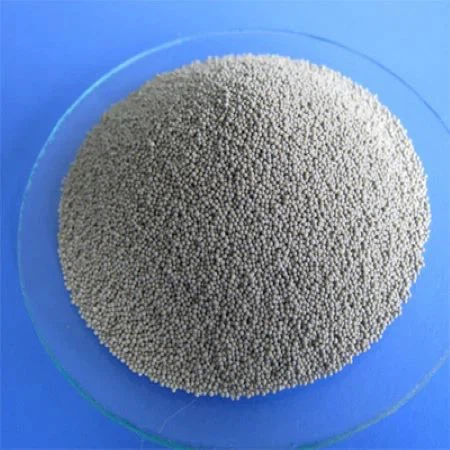
Henan Zhengnai New Materials Co., Ltd. is a professional petroleum fracturing proppant manufacturer in Henan Province, with the factory based at No. 90 Weisan Road, Wen County Industrial Cluster Area, Jiaozuo City, covering an area of more than 65,000 square meters, and a sales service company set up in Zhengzhou City. Its registered capital is RMB50 million and it has more than 200 employees. Henan Zhengnai adheres to the strategy of "promoting enterprises through science and technology" and has currently obtained 6 invention patents and 19 utility model patents authorized by the Patent Office of the State Intellectual Property Office.
Quality Guaranteed
Zheng Nai Petroleum's fracturing proppant products fully comply with the standards of the American Stim-Lab, and the British Frac-tech laboratory etc. The product performance has reached the international leading level and passed American Petroleum Institute APIQ1 certification. And we has passed the national laboratory accreditation CNAS certification. Recognized as a first-level material supplier by PetroChina and Sinopec, the company's products have been widely used in various domestic oil and gas fields.
Professional Team
The company has advanced laboratory facilities and has established strong partnerships with well-known companies, creating an ideal environment for continuous innovation and research and development. This collaborative approach enables the company to always stay at the forefront of technological advancement and maintain a competitive advantage in the industry.
Leading Service
Our team is dedicated to providing a one-stop service that addresses all your needs and concerns. We go above and beyond to resolve any issues you may face. Don't hesitate to reach out to us for assistance.
Widely sold
Recognized as a first-level material supplier by PetroChina and Sinopec, the company's products have been widely used in various domestic oil and gas fields, especially PetroChina Southwest Oil and Gas Field, Changqing Oil Field, Xinjiang Oil Field, Jilin Oil Field, Sinopec North China Oil Field, Shengli Oil Field, Yanchang Oil, China-Australia Coalbed methane and other users. The products are exported to the United States, Kazakhstan, Ukraine, Brazil and other countries, and are recognized and praised by customers.

The performance requirements of petroleum fracturing proppant include sufficient compressive strength and wear resistance, low relative density, particle size and shape consistent with oil well design requirements, and good chemical stability.

The main component of petroleum fracturing proppant is ceramic particles, which have high compressive strength and wear resistance and can withstand the strong pressure and friction during injection. In addition, petroleum fracturing proppant also has a low relative density, making it easy to pump downholes.
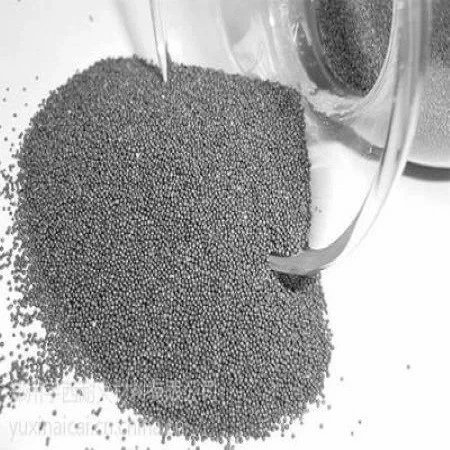
The production process of petroleum fracturing proppant includes crushing, batching, grinding, pelletizing, calcination, pulverized coal preparation, finished product cooling, screening and packaging. Among them, the main raw material is high-grade bauxite.

High strength ceramsite sand is finely processed with high content of bauxite, mixed with some chemical agents and phase inversion agents, made into small round particles with different particle sizes, and sintered in high temperature. Under closing pressure, this product has high strength, low crushing rate, good sphericity and other characteristics. At present, it is a good product for oil and gas fields to fracture and transform the formation.
Proppant sand, a crucial granular substance in oil or gas wells, creates permeable channels for efficient hydrocarbon flow. It comes in various forms tailored to specific well conditions. Frac sand, known for durability and cost-effectiveness, is common in conventional reservoirs where moderate strength suffices. Resin-coated sand enhances toughness with a thin resin layer, increasing resistance to crushing in unconventional reservoirs, thus prolonging proppant life and sustaining fracture openings. Ceramic beads, the pinnacle of proppant technology, offer superior strength, thermal stability, and chemical inertness, ideal for high-pressure, high-temperature applications like shale gas and tight oil formations. Their spherical shape improves packing efficiency, reducing fines migration and maintaining optimal permeability throughout production. These diverse materials highlight the adaptability and sophistication of modern hydraulic fracturing, enabling operators to choose the most appropriate proppant based on reservoir characteristics, economic factors, and environmental constraints, optimizing resource extraction while minimizing ecological impact.
Types of Oil Proppant
Quartz sand proppant
The main component of natural quartz sand is SiO2, with a small amount of Al2O3 Ingredients such as Fe2O3, K2O, Na2O, CaO, MgO, etc. The main mineral component of quartz sand is quartz, with a content usually above 80%, which can reach over 98.5% in high-quality quartz sand. Quartz sand is hard, wear-resistant, and chemically stable. It is only soluble in hydrofluoric acid and not in other acids. Quartz sand has abundant resources, low prices, low density (about 2.65g • cm-3), is easy to pump, and still has good diversion ability after crushing, which has a certain effect on increasing production of oil and gas wells with low closure pressure. Quartz sand proppant has low cost, convenient operation, and a relatively smooth surface after being washed by river water. These features above make quartz sand widely used as a hydraulic fracturing proppant. The diameter of quartz sand particles used as petroleum proppants is generally between 0.1mm and 2mm, also known as fracturing proppants or frac sand. Quartz sand has high brittleness and low strength. When the closing pressure of cracks is high, it is easy to break, significantly reducing the effective support area of cracks and failing to achieve oil and gas production increase. The surface roughness of quartz sand is not good, which is not conducive to increasing the permeability of cracks. The thermal expansion coefficient of quartz sand is relatively high, and there is a risk of sudden expansion when the well depth is deep and the temperature is high.
Ceramic proppants
Due to the insufficient strength of quartz sand proppant to meet the requirements of high closure pressure oil and gas wells, researchers have invented an artificial ceramic proppant. Ceramic proppants are often made from mineral materials such as bauxite as the main raw material, supplemented by various mineral additives and sintered in a pressureless atmosphere. According to the difference in volume density and apparent density after sintering, ceramic proppants can be divided into 3 types: low density, medium density, and high density. Compared with quartz sand proppant, ceramic proppant has high sphericity, smooth surface, good fluidity, high compressive strength, and low crushing rate.Practice has shown that using ceramic proppants for fracturing oil wells can increase production by 30-50% and also extend the service life of oil and gas wells.
Coated proppants
Coated proppants improve their strength, acid and alkali resistance, also known as resin coated proppants. Usually consisting of two parts, the interior is composed of aggregates with a certain strength, and the exterior is coated with resin as a coating. Resin coated proppants have the characteristics of low density and high compressive strength. The surface of coated proppants is smooth, with good water conductivity and easy portability and transmission. In addition to being used for fracturing proppants, resin coated proppants can also effectively prevent proppant backflow, surface peeling, and formation sand production during fracturing fluid backflow. Each particle of the resin coated proppant has a uniform and tough resin shell, and the particles are also bonded together due to certain polymerization, resulting in good high-temperature stability and acid corrosion resistance.
Advantages of Oil Proppant
Durability and Strength
Oil proppant, typically made from high-quality quartz sand, exhibits remarkable durability and strength. This allows it to withstand the intense pressures and stresses encountered in oil and gas reservoirs, maintaining fracture conductivity over long periods.
Cost-Effectivenence
The production of oil proppant is relatively inexpensive compared to other advanced proppants like resin-coated or ceramic proppants. Its affordability makes it a popular choice for operators looking to manage costs while still achieving effective well stimulation.
Environmental Compatibility
Oil proppant is often sourced from natural sand deposits, making it an environmentally compatible option. Its use does not involve synthetic chemicals that could potentially harm the environment, aligning with sustainable practices in the industry.
Ease of Use
The granular nature of oil proppant facilitates easy mixing and pumping during hydraulic fracturing operations. Its consistent particle size and shape contribute to uniform distribution within the fracture, enhancing the efficiency of the fracking process.
Versatility
Suitable for a wide range of reservoir conditions, oil proppant can be effectively used in both conventional and unconventional reservoirs. Its adaptability to different geological settings makes it a versatile tool in the arsenal of oil and gas extraction technologies.
Improved Well Productivity
By creating and maintaining permeable pathways within the reservoir, oil proppant significantly enhances well productivity. This leads to increased hydrocarbon flow rates and extended productive lives of the wells, maximizing resource recovery.
Reduced Fines Migration
The round and smooth particles of oil proppant reduce the likelihood of fines migration, a common issue where small particles clog the pores and reduce permeability. This ensures sustained and reliable well performance over time.
Application of Oil Proppant
Unconventional Resource Extraction
For unconventional resources such as shale gas and tight oil, oil proppant is used to maintain the fractures created during the fracking process. Its ability to withstand high pressures ensures sustained fracture conductivity, enabling efficient extraction from these challenging environments.
Conformance Control
In waterflood operations, oil proppant can be employed to block high-permeability zones and redirect the injected water towards lower-permeability regions. This conformance control improves sweep efficiency and oil recovery rates by ensuring a more uniform distribution of the injected fluid.
Primary Cementing
During well completion, oil proppant may be added to the cement slurry used to line the wellbore. This reinforced cement sheath provides additional strength and durability, reducing the risk of casing failure and enhancing well integrity over time.
Sand Control
In loose, unconsolidated sandstone formations, oil proppant can serve as a filter pack material to prevent sand grains from entering the wellbore and causing equipment wear or blockages. This sand control measure protects the integrity of downhole equipment and ensures smooth production flow.
Enhanced Oil Recovery (EOR)
In secondary and tertiary recovery processes aimed at boosting oil recovery beyond primary methods, oil proppant can be utilized to improve the effectiveness of EOR techniques like polymer flooding or carbon dioxide injection. It creates stable fractures that facilitate the introduction and distribution of EOR agents throughout the reservoir.

How Oil Proppant works
Fracture Creation
During hydraulic fracturing, high-pressure fluid is injected into the rock formation, creating small fractures. Oil proppant is then pumped into these fractures along with the fluid.
Proppant Placement
As the pressure is released, the oil proppant particles settle into the fractures, holding them open and preventing them from closing back up once the pressure subsides.
Permeability Enhancement
The presence of oil proppant in the fractures creates a network of permeable pathways that allow oil and gas to flow more easily from the reservoir to the wellbore.
Flow Path Maintenance
By maintaining these fractures in an open state, oil proppant ensures continuous and efficient hydrocarbon flow, which is essential for maximizing well productivity.
Uniform Distribution
The granular nature of oil proppant allows for uniform distribution within the fracture, providing consistent support along the entire length of the created pathways.
Environmental Compatibility
Being sourced from natural materials, oil proppant minimizes environmental impact, aligning with sustainable practices in the oil and gas industry.
Dry Environment
Store oil proppant in a dry environment to prevent moisture absorption, which can lead to clumping and reduce the effectiveness of the proppant during use.
Covered Storage Area
Ensure the storage area is covered to protect the proppant from direct sunlight and precipitation, both of which can degrade the material over time.
Elevated Platforms
Use elevated platforms or pallets to store oil proppant, keeping it off the ground to avoid contact with moisture or contaminants that may be present on the surface.
Proper Ventilation
Maintain good ventilation in the storage area to prevent the buildup of humidity, which can negatively affect the quality of the proppant.
Containment Bags or Silos
Store oil proppant in durable containment bags or silos designed specifically for granular materials to keep it free-flowing and protected from external elements.
Batch Rotation
Implement a system of first-in, first-out (FIFO) inventory management to ensure that older stock is used before newer stock, minimizing the risk of degradation over time.
Regular Inspection
Conduct regular inspections of stored oil proppant to check for signs of moisture ingress, contamination, or other issues that could compromise its performance.
Certifications


Frequently Asked Questions
Hot Tags: oil proppant, China oil proppant manufacturers, suppliers, factory, ceramic hollow granules for commercial farm permaculture, , porous clay balls for industrial farm permaculture


