


The company is committed to the development, promotion and application of new wear-resistant materials, new technologies and new products, and has established long-term cooperative relationships with harbin boiler, dongguo, dongfang electric, wuxi huaguang, sichuan boiler, etc. It has been recognized as "henan province science and technology small and medium-sized enterprises" and "henan province innovative pilot enterprise" by the henan provincial department of science and technology; "henan province bauxite high temperature material engineering technology research center" recognized by the henan provincial department of industry and information technology; december 2019 it passed the integration certification of industrialization and informatization by the national industry and information technology commission in march; it was recognized as a "specialized, special and innovative" enterprise in 2020; it was recognized as a national high-tech enterprise in 2021.
Why Choose Us
Our factory
The company is committed to the development, promotion and application of new wear-resistant materials, new technologies and new products, and has established long-term cooperative relationships with harbin boiler, dongguo, dongfang electric, wuxi huaguang, sichuan boiler, etc.
Our products
High density and high strength ceramsite proppant,low density and high strength ceramsite proppant,medium density high strength ceramsite proppant,ultra low density and high strength ceramsite proppant.
Production market
Zheng nai petroleum's fracturing proppant products fully comply with the standards of the fracturing acidification center proppant evaluation laboratory of langfang branch of china petroleum exploration and development research institute, the american stim-lab, and the british frac-tech laboratory.
Our certificate
The product performance has reached the international leading level and passed american petroleum institute apiq1 certification.The laboratory of henan zhengnai new materials co., ltd. Has passed the national laboratory accreditation cnas certification.

Sand proppants is an important material in hydraulic fracturing construction. It is brought into underground cracks by fracturing fluid and directly affects the fracturing effect. Proppant selection and performance are critical to the success of fracturing operations. In oil production, proppant helps to maintain the open state of fractures and prevent them from closing due to pressure release, thereby improving the fluidity and production of oil and gas.

The production process of petroleum fracturing proppant includes crushing, batching, grinding, pelletizing, calcination, pulverized coal preparation, finished product cooling, screening and packaging. Among them, the main raw material is high-grade bauxite.

The performance requirements of petroleum fracturing proppant include sufficient compressive strength and wear resistance, low relative density, particle size and shape consistent with oil well design requirements, and good chemical stability.
Sand proppants is a granular material placed into an oil or gas well to create pathways for the hydrocarbons to flow through. It can be made from different materials, including frac sand, resin-coated sand, and ceramic beads. Frac proppant sand is the most commonly used form of proppant and is composed of naturally occurring raw silica sand that has been rounded and has had any impurities removed.
Cost effectiveness
Using proppants can be more cost-effective than traditional drilling methods, allowing companies to extract more oil and natural gas from a single well.
Improved safety
Proppants can make hydraulic fracturing safer by reducing the risk of blowouts and other accidents.
Greater control over fracing
Proppants allow for greater control over the fracing process, allowing companies to target specific areas of a rock formation and extract the most oil and natural gas.
Greater crush strength
As well bores get deeper, the pressure on proppants gets higher, and frac sand is not always up to the task.Sand proppants can withstand a much greater crush strength than traditional frac sand products – up to 10,000 psi.¹ this allows drillers to access much deeper shale formations.
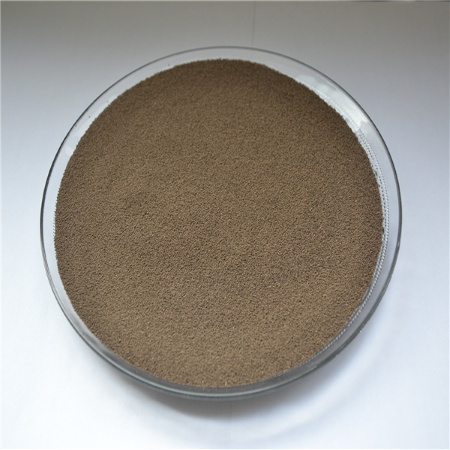
Types of Sand Proppants
Silica frac sand proppants
Silica frac sand is the preferred material for well production in the oil and gas industry. Silica withstands significant forces while remaining chemically stern because it's made of high-quality silica quartz. Silica frac sand proppants can typically withstand forces up to 6,000 psi; however, there are many cases where proppants are required to withstand even greater pressures.
Ceramic proppants
Ceramic proppants are popular because they offer superior strength under the high pressures of deep formations and can withstand higher pressure than silica sand. Ceramic proppants typically endure forces up to 10,000 psi. Although they're more expensive, ceramic proppants are available in a wider selection of grain sizes and boast a higher conductivity than natural frac sand. Many ceramic proppants are made from sintered bauxite, kaolin, magnesium silicate, or blends of bauxite and kaolin. Ceramic proppants are made in the following process:
Crushing: Raw materials are crushed into a powder and mixed with additives to develop specialized formulations that maximize performance.
Pelletizing: The mixed powder is pelletized to create a round, uniform product. Sizing is a critical component of performance. Mesh sizes range from 8 to 140.
Drying: Pellets are dried in industrial dryers to reduce the moisture content of the material.
Sintering: Pellets are sintered in a kiln for curing-the high temperatures cause the chemical reactions and crystalline changes that give ceramic proppants their crush-resistant strength.
Cooling: The pellets are removed from the kiln and sent to a rotary cooler, where they remain until they're ready for transport.
Resin-coated proppants
Resin-coated sand proppants have been popular in fracing for decades because of their ability to form a pack within fractures. Fracturing fluid and resin-coated proppants complement each other for optimized well completion. There are two main types of resin-coated materials:
Curable: Curable resin chemically reacts with other fracturing fluids, which allows the resin to bind together and prevents materials from flowing back into the wellbore.
Pre-cured resin: Pre-cured resin is fully cured before being injected into the fracture, making it highly resistant to crushing and interaction with other chemicals in the well.
Frac Sand and Proppant Size and Shape
Frac sand and proppant applications
Hydraulic fracturing is used in the oil and gas industry to increase the flow of oil and/or gas from a well. The producing formation is fractured open using hydraulic pressure and then proppants (propping agents) are pumped into the oil well with fracturing fluid to hold the fissures open so that the natural gas or crude oil can flow up the well. The proppant size, shape, and mechanical strength influences the integrity of the newly created fractures, and therefore the flow of oil and gas out of the well.
Frac sand & proppant characteristics
The material used for proppants can range from naturally occurring sand grains called frac sand (top left), resin coated sand (top right), to high-strength ceramic materials (bottom left), and resin coated ceramic materials (bottom right).
Quality control
The quality control of the proppants is described mainly in iso 13503-2 (1), which replaces the earlier api standards rp 56, 58 and 60. Among other tests, the standards demand the test of size, shape and crush resistance.
Size
The size range of the proppant is very important. Typical proppant sizes are generally between 8 and 140 mesh (106 µm - 2.36 mm), for example 16-30 mesh (600 µm – 1180 µm), 20-40 mesh (420 µm - 840 µm), 30-50 mesh (300 µm – 600 µm), 40-70 mesh (212 µm - 420 µm) or 70-140 mesh (106 µm - 212 µm). When describing frac sand, the product is frequently referred to as simply the sieve cut, i.E. 20/40 sand.
Shape
The shape of the proppant is important because shape and size influence the final permeability through the fracture. A wide range of particle sizes and shapes will lead to a tight packing arrangement, reducing permeability/conductivity. A controlled range of sizes and preferential spherical shape will lead to greater conductivity. The roundness has been historically analyzed using a visual, manual method based on the chart shown in the figure below, originally developed by krumbein and sloss. This method results in large subjective differences from operator to operator.
Proppant sand plays a pivotal role in hydraulic fracturing, a process crucial for unlocking oil and gas reserves trapped in shale formations. During fracing, a high-pressure fluid mixture, including water and additives, is injected into a wellbore to create fractures in the rock. These fractures are kept open by proppant sand, which is introduced into the fractures to prevent them from closing. This enables the efficient flow of hydrocarbons to the surface. The choice of proppant size and type, as well as the amount used, directly influences well productivity. Properly selected proppants enhance permeability and maximize oil and gas recovery from reservoirs.
Frac sand production process includes: Raw materials – sizing – magnetic separation – scrubbing – drying & screening – solid waste management. Frac sand production equipments include: Silo, vibrating feeder, vibrating screen, magnetic separator, silica scrubbing machine, dryer, square swing screen, thickener and box filter press.
Sizing
Firstly, the fracturing sand is stored in the silo and screened by linear vibrating screen. After screening, it is extracted separately for > 20 purposes.
Magnetic separation
Magnetic separation through magnetic separator for < 20 purposes.
Scrubbing
The scrubbing machine performs strong cleaning, and then enters the sand washing machine for cleaning and dehydration. It is separated by the impeller separator, and then enters the lower dehydration screen for dehydration treatment.
Drying & screening
The cleaned fracturing sand enters the dryer for drying, and then enters the square swing screen for fine screening.
Solid waste management: The overflow slurry in the washing process enters the thickener for clean water recovery. 80% of the wastewater can be recovered in this process, and the underflow of the thickener enters the filter press for treatment into mud cake.
How to Choose Sand Proppants
Sphericity and roundness
Sphericity refers to the degree to which the sand proppants is close to spherical. Roundness refers to the "round degree" of frac sand particles, the more edges and corners of frac sand particles, the worse the roundness; on the contrary, the edges and corners are smooth, the roundness is good. Similar size round grains can ensure consistent permeability, thus providing greater fracture conductivity.
The sphericity and roundness of natural frac sand should not be ≤ 0.6. In the actual testing, the sand proppants and roundness are tested with the proppant sphericity and roundness chart.
Acid solubility
Acid solubility refers to the proportion of the mass of proppant dissolved by acid in acid solution.
Acid resistance is an important index of fracturing proppant. The proppant with good acid resistance can work in acidic strata for a longer time and maintain good conductivity. The allowable acid solubility values of various particle size proppants are shown in the table below. It is worth noting that the acid solubility standards of frac sand and ceramsite proppants are the same.
Turbidity
The turbidity of proppant refers to the degree of turbidity of the liquid after a certain mass of proppant is added to the distilled water of a specified volume, shaken and placed for a certain period of time, in ftu.
Turbidity describes the surface finish of the proppant. According to the standards, the frac sand turbidity should be ≤ 100ftu. This can be solved by washing during processing.
Crush resistance
Crush resistance is the crushing rate determined by the pressure test of a certain amount of fracturing sand proppant under rated pressure. The main factors affecting the crushing rate are roundness, sphericity, surface finish, microstructure etc.
The crushing rate of frac sand proppant affects the fracture conductivity. American petrleum institute(api) requires frac sand to withstand stress of 4,000–6,000 psi.
Size
The size of the frac sand proppants is related to the viscosity of the fluid system and its ability to transport sand into the fracture, and the size range of the proppant is very important. Typical frac sand proppant sizes are usually between 20 – 140 mesh (106μm – 850μm), for example, 20 – 40 mesh (420μm – 840μm), 40 – 70 mesh (212μm – 420μm) or 70 -140mesh (106μm – 212μm).
Proppant density
The density of frac sand proppants is the mass of proppant per unit volume (g/cm ³), which describes the overall density of the proppant accumulation. The main factors affecting the density are roundness, sphericity, surface finish and so on. The density of oil fracturing sand is low, which is easy to pump downhole. If the density is high, it is difficult to suspend in the fracturing fluid and fill in the fracture.
The Sand Proppants Mining Process
Sand proppants mining involves several distinct stages, each essential for extracting, processing, and delivering high-quality sand to fracing sites.
Exploration and site selection
Mining companies begin by identifying potential frac sand deposits through geological surveys and exploratory drilling. Factors such as sand quality, accessibility, and environmental considerations influence site selection.
Extraction
Once a suitable site is identified, the extraction process begins. Open-pit mining and underground mining are the two primary methods used. Open-pit mining involves removing layers of soil and sand using heavy machinery, while underground mining accesses deeper deposits through tunnels and shafts.
Processing
Raw frac sand undergoes extensive processing to meet the stringent specifications required for hydraulic fracturing. This process involves washing, drying, and screening the sand to remove impurities and ensure uniform particle size and shape.
Transportation
After processing, the frac sand is transported to storage facilities or directly to fracking sites. Trucks, trains, and barges are commonly used for transportation, depending on the proximity of the mining operation to the destination.
Utilization
Upon reaching the fracking site, the sand proppants is mixed with water and chemicals to form a slurry, which is then injected into the well at high pressure. The sand particles act as proppants, holding open the fractures created in the rock and releasing oil and gas.
Certifications


Our Factory
The company is committed to the development, promotion and application of new wear-resistant materials, new technologies and new products, and has established long-term cooperative relationships with harbin boiler, dongguo, dongfang electric, wuxi huaguang, sichuan boiler, etc. It has been recognized as "henan province science and technology small and medium-sized enterprises" and "henan province innovative pilot enterprise" by the henan provincial department of science and technology; "henan province bauxite high temperature material engineering technology research center" recognized by the henan provincial department of industry and information technology; december 2019 it passed the integration certification of industrialization and informatization by the national industry and information technology commission in march; it was recognized as a "specialized, special and innovative" enterprise in 2020; it was recognized as a national high-tech enterprise in 2021.


FAQ
Hot Tags: sand proppants, China sand proppants manufacturers, suppliers, factory, ceramic hollow granules for commercial farm permaculture, porous clay balls for industrial farm permaculture,


