


The company is committed to the development, promotion and application of new wear-resistant materials, new technologies and new products, and has established long-term cooperative relationships with harbin boiler, dongguo, dongfang electric, wuxi huaguang, sichuan boiler, etc. It has been recognized as "henan province science and technology small and medium-sized enterprises" and "henan province innovative pilot enterprise" by the henan provincial department of science and technology; "henan province bauxite high temperature material engineering technology research center" recognized by the henan provincial department of industry and information technology; december 2019 it passed the integration certification of industrialization and informatization by the national industry and information technology commission in march; it was recognized as a "specialized, special and innovative" enterprise in 2020; it was recognized as a national high-tech enterprise in 2021.
Why Choose Us
Our factory
The company is committed to the development, promotion and application of new wear-resistant materials, new technologies and new products, and has established long-term cooperative relationships with harbin boiler, dongguo, dongfang electric, wuxi huaguang, sichuan boiler, etc.
Our products
High density and high strength ceramsite proppant,low density and high strength ceramsite proppant,medium density high strength ceramsite proppant,ultra low density and high strength ceramsite proppant.
Production market
Zheng nai petroleum's fracturing proppant products fully comply with the standards of the fracturing acidification center proppant evaluation laboratory of langfang branch of china petroleum exploration and development research institute, the american stim-lab, and the british frac-tech laboratory.
Our certificate
The product performance has reached the international leading level and passed american petroleum institute apiq1 certification.The laboratory of henan zhengnai new materials co., ltd. Has passed the national laboratory accreditation cnas certification.

Ceramsite sand plays an important role in the oil and gas extraction process. Its main function is to enter rock cracks as a filler during the fracturing process to support the cracks from closing due to stress release, thereby maintaining high conductivity, allowing oil and gas to flow smoothly, and increasing production.

The fracking proppant sand is made by fine processing with high content of bauxite, mixing some chemical agents and phase-changing agents to produce small round particles of different sizes, which are sintered at high temperature, the product has the characteristics of high strength, low crushing rate and good sphericity under closed pressure. It is a good product for fracturing and reforming formation in oil and gas field.

In the process of oil and gas extraction, after fracturing treatment of high closing pressure and low permeability mineral deposits, fluid needs to be injected into the rock base to exceed the fracture strength of the formation, causing cracks in the rock formations around the wellbore to form a channel with high-level flow capabilities.

The frac proppant production line is an industrial production line used to produce frac proppant. Petroleum fracturing proppant is a support material used in the oil and natural gas extraction process. It can maintain high conductivity of oil and gas wells and increase oil and natural gas production.

Ceramsite sand has high fracturing strength and is mainly used for underground support in oil fields to increase the production of oil and natural gas. It is an environmentally friendly product. This product uses various raw materials such as high-quality bauxite and coal, and is sintered with ceramics.
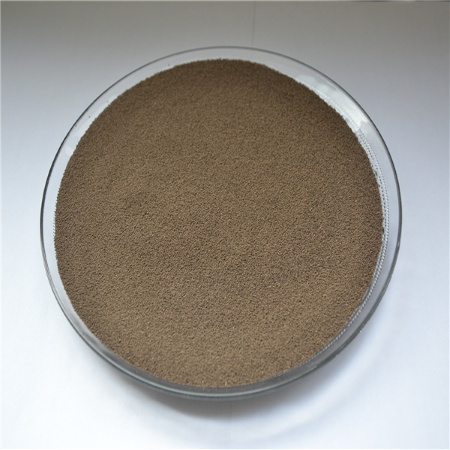
Petroleum fracturing proppant is an important material used in the oil and gas extraction process. Its main function is to support artificial fractures during the hydraulic fracturing process to increase the production of oil and gas wells.
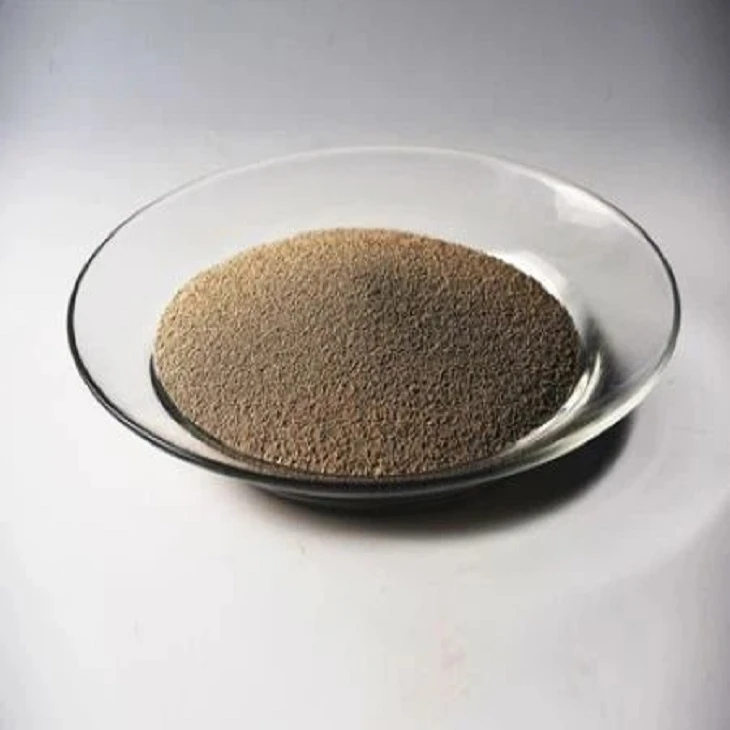
The production process of petroleum fracturing proppant includes crushing, batching, grinding, pelletizing, calcination, pulverized coal preparation, finished product cooling, screening and packaging. Among them, the main raw material is high-grade bauxite.

The performance requirements of petroleum fracturing proppant include sufficient compressive strength and wear resistance, low relative density, particle size and shape consistent with oil well design requirements, and good chemical stability.

Petroleum fracturing proppant enters the formation along with the high-pressure solution and fills the cracks in the rock formation to support the cracks from closing due to stress release, thereby maintaining high conductivity, allowing oil and gas to flow smoothly, and increasing production.
What is Hydraulic Fracturing Proppant?
A hydraulic fracturing proppant is a solid material, typically sand, treated sand or man-made ceramic materials, designed to keep an induced hydraulic fracture open, during or following a fracturing treatment, most commonly for unconventional reservoirs. It is added to a fracking fluid which may vary in composition depending on the type of fracturing used, and can be gel, foam or slickwater–based. In addition, there may be unconventional fracking fluids. Fluids make tradeoffs in such material properties as viscosity, where more viscous fluids can carry more concentrated proppant; the energy or pressure demands to maintain a certain flux pump rate (flow velocity) that will conduct the proppant appropriately; ph, various rheological factors, among others.
Advantages of Hydraulic Fracturing Proppant
Enhanced oil and gas recovery
Hydraulic fracturing proppant plays a critical role in maximizing the recovery of oil and gas resources from unconventional reservoirs. By maintaining open fractures within the rock matrix, these proppants ensure continuous flow of hydrocarbons towards extraction wells, leading to increased production rates and prolonged well life.
Improved well productivity
The proper selection and placement of hydraulic fracturing proppant can significantly improve the overall productivity of a well. High-quality proppants with superior mechanical properties, such as crush resistance and conductivity, enable more effective fluid transport within the fracture network, resulting in higher flow rates and reduced operational costs.
Versatility
Hydraulic fracturing proppants come in various forms, including natural sand, ceramic materials, and resin-coated alternatives, allowing operators to tailor their choice according to specific reservoir conditions, well depths, and desired performance criteria. This flexibility ensures optimal results across a wide range of geological settings and extraction scenarios.
Environmental considerations
While hydraulic fracturing has faced scrutiny regarding its environmental impact, advancements in proppant technology have contributed to mitigating some concerns. For instance, the development of lighter and more sustainable proppants has led to reduced transportation requirements and lower greenhouse gas emissions associated with their deployment.
Sand
Sand is the simplest proppant material. Sand is cheap, but at higher stresses it shows a comparatively strong reduction in permeability.
Ceramic particles
Fired ceramic spheroids have been described for use as a well proppant. Each spheroid has a core made from raw materials comprising mineral particulates, silicium carbide, and a binder. The mixture includes a mineral with chemically bound water or sulfur, which blows the mixture during firing.
Bauxite
Sintered bauxite spheres containing silica are standard proppant materials. The particles have a size range from 0.02 to 0.3 μm. They are enhanced to resist stress corrosion by inclusion of 2% zirconia in the mix before firing. A process for manufacturing a material suitable for use as a proppant is characterized by the following steps:
A fine fraction is separated from a naturally occurring bauxite. The fine fraction is an uncalcinated natural bauxite fraction composed largely of monomineralic particles of gibbsite, boehmite, and kaolinite. The kaolinite represents no more than 25% of the total. The separated fine fraction is pelletized in the presence of water. The pellets produced are treated to remove water.
Cordierite
- Cordierite is a magnesium iron aluminium cyclosilicate [193]. Typically it occurs in contact or regional metamorphism of argillaceous rocks. A proppant containing cordierite has been described, as well how to use this proppant .
- A cordierite having an α-cordierite phase that is greater than the β-cordierite phase present in the cordierite has been described. The α-cordierite phase can exist in a hexagonal crystal structure and the β-cordierite phase can exist in an orthorhombic crystal structure.
Light-weight proppants
- Light-weight propping agents have a specific gravity of less than 2.60 g cm−3. They are made from kaolin clay and eventually with a light-weight aggregate. Special conditions of calcination are necessary .
- The alumina content is between 25% and 40%. A high-strength proppant has been described with a specific gravity of less than 1.3 g cm−3.
Porous pack with fibers
- It is possible to build within the formation a porous pack that is a mixture of fibers and the proppant. The fibrous material may be any suitable material, such as natural or synthetic organic fibers, glass fibers, ceramic fibers, and carbon fibers.
- A porous pack filters out unwanted particles, proppant, and fines, while still allowing production of oil. Using fibers to make a porous pack of fibers and a proppant within the formation reduces the energy consumption of equipment. Pumping the fibers together with the proppant provides significant reductions in the frictional forces that otherwise limit the pumping of fluids containing a proppant.

Fracturing proppant is an indispensable filler in the fracking process. The proppant supports fractures and prevents their closure by forming a highly dredging oil/gas flow channel. The proppant type and particle characteristics determine the flow conductivity of the fractures. The stronger the flow conductivity, the higher the oil/gas production capacity. However, based on the fitting formula theory, the proppant particle size and ratio to sand have an impact on the friction. This causes abrasion near the well and sand blockages in the crack.
In the fracturing process, ideal proppants have high compressive strengths and a small crushing rate. Most proppants are spherical particles with uniform size and smooth surface, which are easy to transport in fracturing fluid. When the proppant supports the fracture, it does not react with the formation fluid. The origin of the proppant is river sand, which comes from the arkansas river in the united states. Until the mid-1950s, natural quartz sand, was widely used in fracking. After a few decades, ceramic proppants were utilized in the fracturing process. Ceramic proppants have the advantages of having high strength, as well as good corrosion resistance and roundness. From the 1980s till now, coated , biological, and self-suspending proppants continue to improve proppant performance.
Manufacture Ceramic Proppants for Hydraulic Fracturing
The hydraulic fracturing or "fracking" industry ebbs and flows in an indirectly proportional relationship the price of crude oil, but the reality is that it continues to be an important and growing industry. As with any highly competitive industry, the best way to maintain profitability is to improve efficiencies in both processes and equipment. One of the products consumed in high amounts are eco-friendly ceramic proppants which are introduced under high pressure into the fractured subsurface to "prop" open fractures and allow oil and gas to flow through the fractures. Enhancements in the characteristics of ceramic proppants significantly improve the efficiencies of fracking operations and therefore play a critical role in the profitability of the fracking industry.
Care must be taken when manufacturing ceramic proppants so that all physical specifications are met to ensure the highest yields when used in fracking operations. In particular, proppants must be strong enough to hold the fractures open while still retaining their roundness to maximize the permeability of the fractures.
Higher conductivity is achieved by manufacturing proppants that are very round and homogeneous in both size and shape to maximize the interstitial space between particles. Proppants with a high roundness factor provide the highest rate of contact throughout the hydraulic fractures when injected into the wells. They must also be crush resistant to withstand closure stresses which exceed 8,000 to 10,000 psi, which factors into the choice of ceramic over other materials such as silica sand. Most importantly, to remain profitable, proppant manufacturers must generate high yields when manufacturing batches of proppants, which is most often determined by the rate of homogeneity within and across each batch. A strong, round, and homogeneous proppant settles in cracks with the highest permeability and therefore works best in fracking operations as it generates the highest rate of flow, higher production rates, and maximum efficiencies.
The Step-by-Step Process of Hydraulic Fracturing Proppant
Site preparation
The first step in the hydraulic fracking process is preparing the site. This involves clearing the area, setting up the necessary equipment, and ensuring all safety measures are in place.
Drilling the well
Once the site is prepared, a well is drilled into the earth. This well often reaches several thousand feet deep, penetrating the rock formations where oil or gas is located. The drilling can be done vertically or horizontally, depending on the characteristics of the oil or gas reservoir.
Well casing
After the well is drilled, it is encased with steel and cement. This casing is crucial for the protection of groundwater resources. It prevents fracking fluids and hydrocarbons from leaking into the surrounding environment.
Perforation
A perforating gun is then lowered into the wellbore to the desired depth. This tool is used to create holes in the casing and cement, providing a path for the fracking fluid to enter the rock formation.
Injection of fracking fluid
The next step is the injection of the fracking fluid. This fluid, composed mainly of water, sand, and a small percentage of chemicals, is pumped into the well at high pressure. The pressure of the fluid is strong enough to create fractures in the rock formation.
Fracture propagation and proppant placement
As the fluid creates fractures in the rock, the sand in the fracking fluid, known as proppant, enters these fractures. The role of the proppant is to keep the fractures open once the injection pressure is released. This allows the gas or oil to flow freely.
Production
After the fracking process is completed, the pressure in the well is reduced, and the oil or gas begins to flow back to the surface. The well can now start producing oil or gas.
Flowback and waste management
The fluid that flows back to the surface, known as flowback, contains water and various chemicals. This fluid needs to be managed properly to prevent environmental contamination. It's typically stored in tanks or pits on-site before being treated, recycled, or disposed of.
Water wells
Just as hydraulic fracking is used to increase the rate and efficiency of recovery for oil and gas, it can also be used to stimulate groundwater wells. This technique has successfully been done not only in the us, but also in australia and south africa.
Mining applications
Hydraulic fracking also has mining applications where it can be used to induce controlled rock caving. It has also been proposed for uranium mining in which it will be used to inject substances that will dissolve the uranium so that it can then be pumped to the surface.
Energy
Hydraulic fracking is used in geothermal systems to enhance heat extraction and produce electricity.
Waste
Hydraulic fracking is used in waste remediation processes, to dispose of waste by injecting it into deep rock formations, and for geologic sequestration of carbon dioxide.
Measurement
- Hydraulic fracking can be used by geologists to measures stress levels within the earth.
- As hydraulic fracking technology advances, it is likely to become applicable in currently unforeseen ways. In addition to fracking, the leading hydraulic fracking companies in the oil & gas industry as a whole will continue to innovate and create new processes and methodology to produce fuel sources for the world's consumption.
Certifications


Our Factory
The company is committed to the development, promotion and application of new wear-resistant materials, new technologies and new products, and has established long-term cooperative relationships with harbin boiler, dongguo, dongfang electric, wuxi huaguang, sichuan boiler, etc. It has been recognized as "henan province science and technology small and medium-sized enterprises" and "henan province innovative pilot enterprise" by the henan provincial department of science and technology; "henan province bauxite high temperature material engineering technology research center" recognized by the henan provincial department of industry and information technology; december 2019 it passed the integration certification of industrialization and informatization by the national industry and information technology commission in march; it was recognized as a "specialized, special and innovative" enterprise in 2020; it was recognized as a national high-tech enterprise in 2021.


FAQ
Hot Tags: hydraulic fracturing proppant, China hydraulic fracturing proppant manufacturers, suppliers, factory, proppant for oil well fracturing technology, fracturing proppant for oil field production, proppants for petroleum engineering, proppants for oil well stimulation, fracturing proppant for oil and gas exploration and production, proppants for enhancing oil recovery


