

Frac sand-also known as fracturing sand or proppant sand-is an essential component that keeps hydraulic fractures open after the fracturing fluid has been pumped out, thereby enabling oil and natural gas to flow from the reservoir into the wellbore. This specialized sand must meet rigorous specifications regarding size, shape, compressive strength, and chemical composition to function effectively under extreme downhole conditions.
Hydraulic fracturing involves pumping millions of gallons of fluid mixed with proppants-fine, granular materials-into underground rock formations at high pressure, creating fractures that extend hundreds of feet from the wellbore. Proppants, typically consisting of sand or engineered ceramics, play a critical role in this process by physically propping the fractures open. Once the pressure is released, these proppants remain in place, continuing to hold the fractures open and creating conduits for the flow of oil and gas. The quality and performance of these materials directly impact well productivity and long-term recovery rates.
Ceramic Proppants vs. Frac Sand: A Technical Comparison
The performance gap between ceramic proppants and traditional frac sand becomes most apparent under high-stress conditions. While traditional industrial sand (conventional proppant) may begin to crush under moderate closure stress, engineered ceramic proppants maintain their structural integrity under significantly higher pressures. This superior compressive strength translates directly into sustained conductivity-the ability to facilitate fluid flow-throughout the productive lifespan of the well.
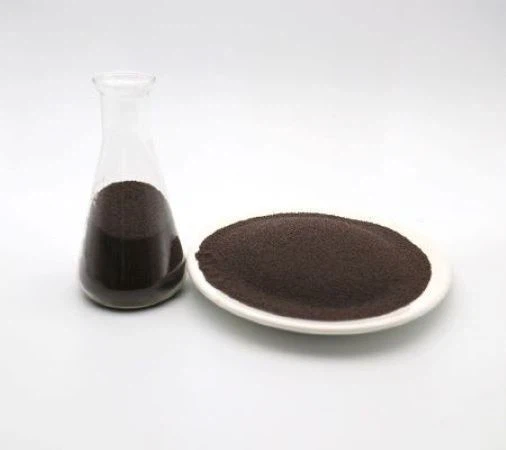
Conductivity is perhaps the most critical differentiating factor between various types of proppants. Ceramic proppants exhibit significantly higher conductivity than traditional sand, with specific values varying depending on stress conditions and product formulation. This enhanced conductivity stems from their exceptional particle uniformity, optimal packing characteristics, and superior resistance to degradation under stress.
Performance Characteristics Favoring Ceramic Proppants:
Exceptional compressive strength under high-stress conditions
Enhanced conductivity achieved through optimized particle geometry
Improved transport characteristics within fracturing fluids
Consistent dimensional accuracy and uniformity
Predictable performance across a wide range of applications
Specific products-such as lightweight ceramic formulations-can be engineered to optimize transport efficiency within low-viscosity fluids while simultaneously maintaining the requisite strength for the target application. This enhanced transport capability facilitates better distribution of proppant throughout the entire fracture network and improves contact with the reservoir.
Engineered products-such as high-conductivity ceramic proppants-offer precise particle size distribution and uniform sphericity, thereby maximizing performance predictability. Medium-strength ceramic products serve as cost-effective alternatives to premium-grade proppants, while still outperforming traditional sand in most applications.
Make an Informed Choice: A Guide to Proppant Selection
Proppant selection criteria should be tailored to specific application scenarios, taking into account reservoir characteristics, completion design, and economic objectives. High-stress environments, deepwater operations, and critical wells typically necessitate the use of premium ceramic proppants, given their superior performance under harsh conditions. Medium-strength applications, conversely, can utilize cost-effective ceramic proppants that outperform sand-based alternatives while maintaining economic viability.
Factors to Consider When Selecting Proppant:
Reservoir pressure and stress conditions
Well depth and completion complexity
Economic objectives and budgetary constraints
Safety and environmental requirements
Long-term production goals and field development strategies
Modern proppant portfolios encompass a comprehensive range of solutions, spanning from traditional sand-based proppants to ultra-high-performance ceramic proppants. This extensive product line enables operators to optimize proppant selection for specific applications, balancing performance requirements with cost considerations. Advanced product lines offer a host of specialized features, such as enhanced transport characteristics, production assurance capabilities, and fracture evaluation technologies.
The evolution from traditional frac sand to engineered ceramic proppants represents a significant advancement in hydraulic fracturing technology, offering operators superior performance, enhanced safety, and greater long-term value in demanding operational environments.