

What are the Rheological Properties of High Strength Proppant - laden Fluids?
As a high - strength proppant supplier, I've spent a great deal of time exploring the intricate world of proppant - laden fluids and their rheological properties. These properties play a crucial role in the success of hydraulic fracturing operations, which are essential for extracting oil and gas from deep - seated rock formations.
Understanding Rheology
Rheology is the study of the deformation and flow of matter. In the context of high - strength proppant - laden fluids, it focuses on how these fluids behave under different stress and strain conditions. The rheological properties of these fluids determine how well they can transport proppants to the desired locations within the fractures and how they interact with the surrounding rock formations.
One of the primary rheological properties is viscosity. Viscosity is a measure of a fluid's resistance to flow. A high - viscosity fluid is thick and flows slowly, while a low - viscosity fluid is thin and flows more easily. In proppant - laden fluids, the viscosity needs to be carefully controlled. If the viscosity is too low, the proppants may settle out of the fluid before reaching the intended location in the fracture. On the other hand, if the viscosity is too high, it may require excessive pumping pressure to inject the fluid into the wellbore, which can be costly and may even damage the well.
Another important rheological property is shear thinning. Shear thinning is a phenomenon where the viscosity of a fluid decreases as the shear rate (the rate at which the fluid is deformed) increases. Many high - strength proppant - laden fluids exhibit shear - thinning behavior. This is beneficial because during pumping, the fluid experiences high shear rates near the pump and in the wellbore. The shear - thinning property allows the fluid to flow more easily under these high - shear conditions, reducing the pumping pressure required. Once the fluid reaches the fractures where the shear rate is lower, its viscosity increases, helping to keep the proppants suspended.
Factors Affecting Rheological Properties
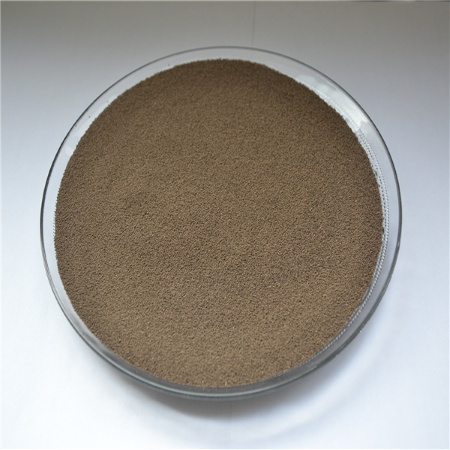
Several factors can influence the rheological properties of high - strength proppant - laden fluids. One of the most significant factors is the type and concentration of the proppant. Different types of proppants, such as Frac Sand Proppant and High Strength PProppant, have different shapes, sizes, and surface properties. These characteristics can affect how the proppants interact with the fluid and with each other, thereby influencing the fluid's viscosity and other rheological properties.
For example, larger proppants generally require a higher - viscosity fluid to keep them suspended. As the concentration of proppants in the fluid increases, the viscosity of the fluid also tends to increase. This is because the proppants take up space within the fluid and impede its flow.
The type and concentration of additives in the fluid also play a crucial role. Additives such as polymers, surfactants, and cross - linkers can be used to modify the rheological properties of the fluid. Polymers, for instance, can increase the viscosity of the fluid and enhance its shear - thinning behavior. Surfactants can reduce the surface tension of the fluid, which can affect its ability to wet the proppants and the rock surface. Cross - linkers can form a three - dimensional network within the fluid, further increasing its viscosity and improving its proppant - carrying capacity.
Temperature is another important factor. As the temperature increases, the viscosity of most fluids decreases. In a wellbore, the temperature can vary significantly with depth. Therefore, it is essential to design the proppant - laden fluid to have appropriate rheological properties over the range of temperatures encountered during the fracturing operation.
Importance of Rheological Properties in Hydraulic Fracturing
The rheological properties of high - strength proppant - laden fluids are of utmost importance in hydraulic fracturing. In a successful fracturing operation, the proppants need to be evenly distributed throughout the fractures to create a conductive pathway for the oil and gas to flow. The rheological properties of the fluid determine how well the proppants can be transported and placed within the fractures.
A fluid with good rheological properties can ensure that the proppants are carried deep into the fractures and are not left behind in the wellbore or near the wellbore entrance. This helps to maximize the fracture conductivity, which is a measure of how easily the oil and gas can flow through the fractures. A higher fracture conductivity means higher production rates and better overall well performance.
Moreover, the rheological properties of the fluid can also affect the integrity of the fractures. If the fluid has poor rheological properties, it may cause uneven stress distribution within the fractures, leading to premature fracture closure or the formation of non - conductive regions. This can significantly reduce the effectiveness of the fracturing operation.
Measuring Rheological Properties
To ensure that the high - strength proppant - laden fluids have the desired rheological properties, accurate measurement techniques are required. One common method is to use a viscometer. A viscometer measures the viscosity of a fluid by applying a known shear stress or shear rate and measuring the resulting deformation or flow. There are different types of viscometers, such as rotational viscometers and capillary viscometers, each with its own advantages and limitations.
Rheometers are more advanced instruments that can measure a wider range of rheological properties, including shear stress, shear rate, viscosity, and elastic modulus. They can also perform dynamic tests to study the viscoelastic behavior of the fluid, which is important for understanding how the fluid responds to cyclic loading and unloading conditions.
Optimizing Rheological Properties for Different Applications
Different hydraulic fracturing applications may require different rheological properties of the proppant - laden fluid. For example, in a shallow well with a low - pressure environment, a lower - viscosity fluid may be sufficient to transport the proppants. However, in a deep well with high - pressure and high - temperature conditions, a more complex fluid with enhanced rheological properties may be needed.
As a high - strength proppant supplier, we work closely with our customers to understand their specific needs and optimize the rheological properties of our proppant - laden fluids. We conduct extensive laboratory tests and field trials to develop fluids that are tailored to different well conditions and proppant types.
We also offer a wide range of Frac Sand Proppant and high - strength proppants, which can be combined with appropriate additives to achieve the desired rheological properties. By providing high - quality proppants and expertise in fluid design, we help our customers improve the efficiency and effectiveness of their hydraulic fracturing operations.

Conclusion
In conclusion, the rheological properties of high - strength proppant - laden fluids are complex but crucial for the success of hydraulic fracturing operations. Understanding these properties and how they are affected by various factors is essential for optimizing the design of the proppant - laden fluid. By carefully controlling the rheological properties, we can ensure that the proppants are effectively transported and placed within the fractures, leading to higher production rates and better well performance.
If you are involved in hydraulic fracturing and are looking for high - quality proppants and expert advice on proppant - laden fluid design, we would be more than happy to assist you. Contact us to discuss your specific requirements and start a partnership that can enhance the efficiency of your operations.
References
- Bird, R. B., Armstrong, R. C., & Hassager, O. (1987). Dynamics of Polymeric Liquids: Volume 1, Fluid Mechanics. John Wiley & Sons.
- Chhabra, R. P., & Richardson, J. F. (2008). Non - Newtonian Flow and Applied Rheology: Engineering Applications. Butterworth - Heinemann.
- Guo, B., & Ghalambor, A. (2005). Hydraulic Fracturing in Oil and Gas Wells. Gulf Professional Publishing.