

As a supplier of high strength proppant, I am often asked about the mechanical properties of this remarkable material. High strength proppants play a crucial role in the oil and gas industry, particularly in hydraulic fracturing operations. In this blog post, I will delve into the key mechanical properties of high strength proppant and explain why they are essential for effective well stimulation.
Compressive Strength
One of the most important mechanical properties of high strength proppant is its compressive strength. Compressive strength refers to the ability of the proppant to withstand the pressure exerted on it within the fractures of the rock formation. In hydraulic fracturing, the proppant is injected into the well under high pressure and then holds the fractures open after the pressure is released. If the proppant does not have sufficient compressive strength, it will crush under the pressure, which can lead to the closure of the fractures and a decrease in well productivity.
High strength proppants are designed to have a high compressive strength to ensure that they can maintain the integrity of the fractures. Our High Strength PProppant is engineered with advanced ceramic materials and manufacturing processes to achieve exceptional compressive strength. This allows it to withstand the high pressures encountered in deep - seated and high - stress reservoirs, providing long - term support for the fractures and maximizing the flow of oil and gas.
Roundness and Sphericity
Roundness and sphericity are also critical mechanical properties of high strength proppant. Roundness describes the smoothness of the proppant grains, while sphericity refers to how closely the proppant grains approximate a perfect sphere. Proppants with high roundness and sphericity have several advantages.
Firstly, they pack more efficiently within the fractures, creating a more stable and permeable proppant pack. This efficient packing leads to better fluid flow conductivity, as the fluids (oil and gas) can easily move through the spaces between the proppant grains. Secondly, proppants with good roundness and sphericity are less likely to damage the formation or cause bridging within the fractures. Bridging can block the flow of fluid and reduce well productivity.
Our high strength proppants are carefully processed to ensure high roundness and sphericity. Through a series of screening and shaping steps, we can produce proppant grains that meet the strictest industry standards for these properties, enabling optimal performance in hydraulic fracturing operations.
Density
The density of high strength proppant is another important mechanical property that affects its behavior in the fractures. Proppants can have different densities, such as low - density, medium - density, and high - density proppants. The choice of proppant density depends on several factors, including the depth of the reservoir, the type of formation, and the fluid used in the fracturing process.
Low - density proppants are often used in shallow reservoirs or when a lighter fracturing fluid is employed. They can be more easily transported and suspended in the fluid, which helps in their placement within the fractures. High - density proppants, on the other hand, are suitable for deeper reservoirs with higher stress levels, as they have better settling characteristics and can withstand greater pressure.
Our High Strength PProppant is available in a range of densities to meet the diverse needs of our customers. Whether you are working on a shallow well or a deep - water project, we can provide a proppant with the appropriate density to ensure effective fracturing and maximum well productivity.

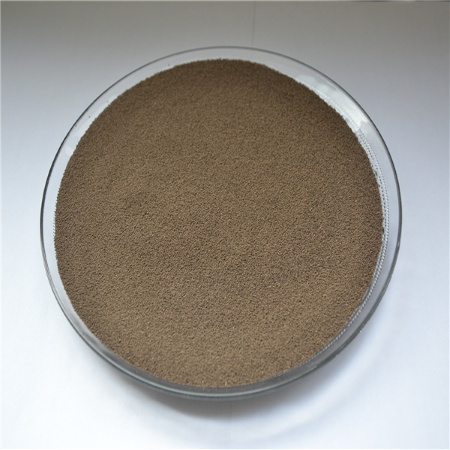
Turbidity
Turbidity is a measure of the cloudiness or haziness of a fluid caused by the presence of suspended particles. In the context of high strength proppant, turbidity is an important property because it reflects the amount of fine particles or dust generated during the handling and transportation of the proppant.
High turbidity can be a problem as these fine particles can clog the pores of the proppant pack and reduce the fluid flow conductivity. They can also cause wear and tear on the equipment used in the fracturing process. Our high strength proppants are manufactured with strict quality control measures to minimize turbidity. We use advanced purification and sizing processes to remove any excess fine particles, ensuring that our proppants have low turbidity and do not cause operational problems during hydraulic fracturing.
Comparison with Frac Sand Proppant
It is also interesting to compare high strength proppant with Frac Sand Proppant. Frac sand proppant is a commonly used material in hydraulic fracturing due to its low cost and wide availability. However, it has some limitations in terms of mechanical properties.
Frac sand typically has lower compressive strength compared to high strength proppant. This means that in high - stress reservoirs, frac sand may crush more easily, leading to reduced fracture conductivity. High strength proppant, with its superior compressive strength, can provide better long - term performance in these challenging environments.
In addition, the roundness and sphericity of frac sand are often lower than those of high strength proppant. This can result in less efficient packing and lower fluid flow conductivity. The density of frac sand is also relatively fixed, while high strength proppant can be engineered to have different densities to suit specific applications.
Importance of Mechanical Properties in Well Performance
The mechanical properties of high strength proppant have a direct impact on well performance. A proppant with good compressive strength can maintain the fractures open, allowing for a continuous flow of oil and gas over a longer period. The high roundness and sphericity ensure efficient packing and high fluid flow conductivity, which are essential for maximizing the production rate.
The appropriate density of the proppant helps in proper placement within the fractures and ensures that the proppant can withstand the reservoir conditions. Low turbidity prevents clogging and equipment damage, ensuring smooth operation of the fracturing process.
Conclusion
In conclusion, the mechanical properties of high strength proppant, including compressive strength, roundness and sphericity, density, and turbidity, are of utmost importance in hydraulic fracturing operations. These properties determine the effectiveness of the proppant in maintaining the integrity of the fractures, providing high fluid flow conductivity, and ensuring the long - term productivity of the well.
As a leading supplier of high strength proppant, we are committed to providing our customers with products that meet the highest standards of quality and performance. If you are involved in the oil and gas industry and are looking for a reliable high strength proppant for your next project, we invite you to contact us for a detailed discussion. Our team of experts can help you select the most suitable proppant based on your specific reservoir conditions and operational requirements.
References
- King, G. E. (2010). Thirty years of gas shale fracturing: What have we learned? SPE Hydraulic Fracturing Technology Conference and Exhibition. Society of Petroleum Engineers.
- Economides, M. J., & Nolte, K. G. (eds.). (2000). Reservoir Stimulation. John Wiley & Sons.