

Hey there, fellow oil and gas enthusiasts! I'm an oil proppant supplier, and today I wanna chat about something super important in the industry: the impacts of oil proppant on the porosity evolution of reservoir rocks.
First off, let's quickly go over what oil proppants are. Oil proppants are small, solid particles that are used in hydraulic fracturing, a process where fluid is pumped into the ground at high pressure to create fractures in reservoir rocks. These proppants are then pumped into these fractures to keep them open, allowing oil and gas to flow more freely to the wellbore. There are different types of proppants, like Oil Proppant, Sand Proppants, and Proppant Oil And Gas. Each type has its own unique properties and is suitable for different reservoir conditions.
Now, let's dig into how these proppants affect the porosity evolution of reservoir rocks. Porosity is a measure of the void spaces in a rock, and it's crucial for oil and gas storage and flow. When proppants are introduced into the fractures of reservoir rocks, they can have several significant impacts.
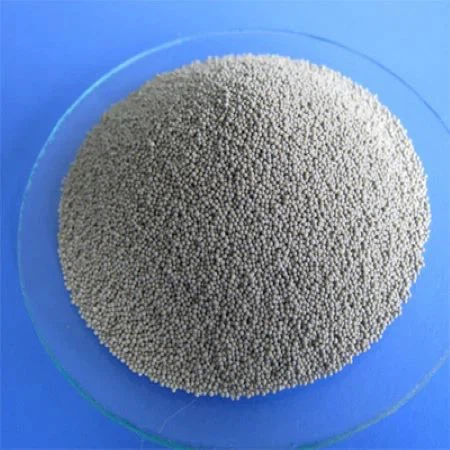

One of the primary effects is the creation of artificial porosity. The fractures that are held open by proppants act as new pathways for fluid flow. These fractures increase the overall porosity of the reservoir rock. Imagine a sponge with a few small holes. When you add more holes to it, it can hold and allow more water to pass through. Similarly, proppants create more space within the rock, enhancing its ability to store and transmit oil and gas.
However, the impact on porosity isn't always straightforward. The size and shape of the proppants play a big role. For instance, if the proppants are too large, they might not fit well into the smaller fractures, and some of the void spaces between the proppants could be wasted. On the other hand, if they're too small, they might get washed away by the fluid flow or cause clogging in the fractures, reducing the effective porosity.
The distribution of proppants within the fractures also matters. A uniform distribution of proppants can lead to a more consistent increase in porosity. But in reality, achieving a perfect distribution is often challenging. Sometimes, proppants can accumulate in certain areas, creating uneven porosity. This can result in preferential flow paths, where the oil and gas tend to flow through the areas with higher porosity, leaving behind some of the hydrocarbons in the less - porous regions.
Another factor to consider is the long - term behavior of proppants. Over time, the proppants can be subjected to high pressures and stresses in the reservoir. This can cause them to break or deform. When proppants break, the smaller particles can fill up some of the void spaces, reducing the porosity. Deformation can also change the shape of the proppants, altering the flow channels within the fractures and affecting the overall porosity and permeability of the reservoir rock.
The type of reservoir rock itself also interacts with the proppants. Different rocks have different mineral compositions and mechanical properties. For example, sandstone is a common reservoir rock. It has relatively high porosity and permeability to begin with. When proppants are used in sandstone reservoirs, they can enhance the existing porosity and create additional flow paths. Shale, on the other hand, has very low porosity and permeability. Proppants in shale reservoirs are crucial for creating and maintaining fractures to increase the porosity and allow oil and gas to flow.
Now, let's talk about how these impacts translate into real - world implications for the oil and gas industry. Understanding the effects of proppants on porosity evolution is essential for optimizing the hydraulic fracturing process. By choosing the right type, size, and amount of proppants, operators can maximize the porosity increase in the reservoir rocks. This leads to higher production rates and better recovery of oil and gas resources.
For us as proppant suppliers, it means we need to offer a wide range of proppant products to meet the diverse needs of different reservoir conditions. We also need to work closely with oil and gas companies to provide technical support and advice on proppant selection.
If you're in the oil and gas business and looking for high - quality proppants, we're here to help. We've got the expertise and the products to ensure that you get the most out of your reservoir rocks. Whether you're dealing with a sandstone reservoir or a shale formation, we can provide the right proppant solution to enhance porosity and boost production. So, don't hesitate to reach out for a chat about your proppant needs and let's discuss how we can work together to make your operations more successful.
In conclusion, the impacts of oil proppants on the porosity evolution of reservoir rocks are complex but extremely important. By carefully considering the properties of proppants and the characteristics of the reservoir rocks, we can optimize the hydraulic fracturing process and improve the efficiency of oil and gas production. So, if you're interested in learning more or discussing potential proppant purchases, feel free to get in touch.
References
- Clarkson, C. R., Bustin, R. M., & Gentzis, T. (2013). A review of recent advances in unconventional tight gas sandstone, shale, and coalbed methane reservoir characterization. Journal of Unconventional Oil and Gas Resources, 3, 1 - 18.
- King, G. E. (2010). Thirty years of gas shale fracturing: What have we learned? Society of Petroleum Engineers.