

Ultra-high-strength frac proppants play a crucial role in the oil and gas industry, especially in hydraulic fracturing operations. As a frac proppant supplier, I have in - depth knowledge of the characteristics that make these proppants stand out in the market.
Physical Characteristics
High Strength
One of the most prominent characteristics of ultra - high - strength frac proppants is their remarkable strength. These proppants are designed to withstand extremely high pressures in the wellbore. In hydraulic fracturing, proppants are injected into the fractures created in the rock formation to keep them open. The rock formations can exert immense pressure on the proppants, and if they are not strong enough, they will crush. Ultra - high - strength proppants, however, have a high compressive strength, which allows them to maintain their shape and integrity under high - stress conditions. For example, in deep - well fracturing where the pressure can reach thousands of pounds per square inch, only ultra - high - strength proppants can ensure the long - term conductivity of the fractures. High Strength PProppant is a type of proppant that demonstrates excellent high - strength performance, making it suitable for challenging downhole environments.
Uniform Size and Shape
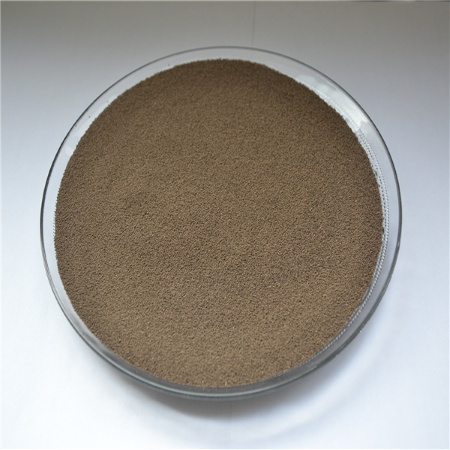
Another important characteristic is the uniformity of size and shape. Ultra - high - strength frac proppants are manufactured to have a narrow size distribution. This uniformity is essential because it allows for consistent packing within the fractures. When proppants have a uniform size, they can form a more stable and efficient network, which enhances the flow of oil and gas through the fractures. Additionally, the shape of the proppants also matters. Spherical or near - spherical proppants are preferred as they can roll easily into the fractures and create a more open and permeable structure compared to irregularly shaped proppants. Our Frac Sand Proppant is carefully processed to ensure a high degree of size and shape uniformity, providing reliable performance in hydraulic fracturing operations.
Low Specific Gravity
Ultra - high - strength frac proppants often have a relatively low specific gravity. A low - density proppant is easier to transport within the fracturing fluid. It requires less energy to pump the proppant into the wellbore, which can reduce the overall cost of the fracturing operation. Moreover, low - density proppants are less likely to settle out of the fracturing fluid during transportation, ensuring that they can be evenly distributed throughout the fractures. This characteristic is particularly beneficial in horizontal wells, where proppant placement is more challenging. Our Frac Sand Proppant offers a good balance between strength and low specific gravity, making it an ideal choice for various well types.
Chemical Characteristics
Chemical Inertness
Ultra - high - strength frac proppants are chemically inert. They do not react with the fracturing fluid, formation fluids, or the surrounding rock. This chemical stability is crucial because any reaction could lead to the formation of precipitates or the degradation of the proppant, which would reduce the conductivity of the fractures. For example, in acidic or alkaline fracturing fluids, a chemically reactive proppant could dissolve or form unwanted compounds. Our proppants are carefully formulated to be chemically stable, ensuring long - term performance in different chemical environments.
Surface Properties
The surface properties of ultra - high - strength frac proppants also play a significant role. A smooth surface can reduce the friction between the proppant and the fracturing fluid, facilitating the transport of the proppant into the fractures. Additionally, the surface can be modified to enhance the adhesion between the proppants and the rock formation or to improve the wettability of the proppant. For instance, a hydrophilic surface can improve the interaction between the proppant and the aqueous fracturing fluid, leading to better dispersion and placement within the fractures.
Performance - related Characteristics
High Conductivity
The primary function of frac proppants is to maintain the conductivity of the fractures, allowing oil and gas to flow from the reservoir to the wellbore. Ultra - high - strength frac proppants are designed to provide high conductivity. Their high - strength and uniform packing ensure that the fractures remain open under high pressures, and the interconnected pore spaces between the proppants allow for efficient fluid flow. In long - term production, high conductivity is essential for maximizing the recovery of oil and gas from the reservoir.
Long - term Stability
In addition to high conductivity, ultra - high - strength frac proppants need to have long - term stability. The downhole environment is harsh, with factors such as temperature, pressure, and chemical exposure changing over time. A stable proppant will not degrade or lose its performance over the life of the well. Our proppants are tested under simulated downhole conditions to ensure their long - term stability, providing reliable support for the production of oil and gas.

Environmental and Economic Characteristics
Environmental Friendliness
In today's society, environmental considerations are increasingly important. Ultra - high - strength frac proppants can be designed to be environmentally friendly. They are often made from natural or recyclable materials, and the manufacturing process can be optimized to reduce the environmental impact. For example, using energy - efficient production methods and minimizing waste generation. Our company is committed to producing proppants that meet environmental standards, contributing to sustainable development in the oil and gas industry.
Cost - effectiveness
From an economic perspective, ultra - high - strength frac proppants offer cost - effectiveness. Although they may have a higher upfront cost compared to some lower - quality proppants, their superior performance can lead to higher oil and gas production rates and longer well life. This means that in the long run, the overall cost per unit of produced oil and gas is reduced. By choosing our high - quality proppants, operators can achieve better economic returns on their investments.
In conclusion, ultra - high - strength frac proppants have a variety of characteristics that make them indispensable in modern hydraulic fracturing operations. Their physical, chemical, performance, environmental, and economic characteristics all contribute to their effectiveness in enhancing oil and gas production. As a frac proppant supplier, we are dedicated to providing high - quality proppants that meet the diverse needs of our customers. If you are interested in our frac proppants and would like to discuss procurement and cooperation, please feel free to reach out to us. We are looking forward to working with you to achieve success in the oil and gas industry.
References
- King, G. E. (2010). Thirty years of gas shale fracturing: What have we learned? Society of Petroleum Engineers.
- Economides, M. J., & Nolte, K. G. (2000). Reservoir stimulation. John Wiley & Sons.