

Hey there! As a supplier of low density ceramsite, I've seen firsthand how the surface texture of this amazing material can have a huge impact on its performance. In this blog post, I'm gonna break down the relationship between surface texture and performance, and why it matters for your projects.
First off, let's talk about what low density ceramsite is. It's a lightweight, porous material made from clay or shale that's fired at high temperatures. It's commonly used in a variety of applications, including oil and gas fracturing, construction, and horticulture. One of the key benefits of low density ceramsite is its low density, which makes it easier to handle and transport than traditional proppants.
Now, let's get into the nitty-gritty of surface texture. The surface texture of low density ceramsite can vary widely depending on the manufacturing process and raw materials used. Some ceramsite has a smooth surface, while others have a rough or porous surface. So, how does this surface texture affect its performance?
1. Proppant Conductivity in Oil and Gas Fracturing
In the oil and gas industry, low density ceramsite is often used as a proppant in hydraulic fracturing operations. The main goal of using a proppant is to keep the fractures in the rock open, allowing oil and gas to flow more freely to the wellbore. The surface texture of the ceramsite plays a crucial role in this process.
A rough or porous surface texture can increase the proppant's conductivity. When the ceramsite is placed in the fractures, the rough surface provides more contact points with the rock, creating a better network for fluid flow. This means that oil and gas can move more easily through the fractures and into the wellbore. On the other hand, a smooth surface may not provide as many contact points, which could potentially reduce the conductivity.
For example, if you're looking for high - performance proppants for your oil and gas operations, you might want to check out our Sand Proppants and Oil Proppant products. Our ceramsite is engineered to have an optimal surface texture for maximum conductivity.
2. Mechanical Strength
The surface texture also affects the mechanical strength of the low density ceramsite. A rough surface can distribute stress more evenly across the particle. When the ceramsite is subjected to high pressures in the wellbore or during transportation, the rough surface helps to prevent the particles from breaking or crushing.
In contrast, a smooth - surfaced ceramsite may be more prone to breakage under pressure. The lack of surface irregularities means that stress can concentrate in certain areas, leading to premature failure of the particles. This is especially important in applications where the ceramsite needs to withstand high pressures, such as deep - well fracturing.
3. Chemical Reactivity
The surface texture can influence the chemical reactivity of the low density ceramsite. A porous surface has a larger surface area, which means there are more sites for chemical reactions to occur. In some cases, this can be beneficial. For example, in environmental applications where the ceramsite is used to remove contaminants from water, a porous surface allows for better adsorption of pollutants.
However, in other applications, excessive chemical reactivity may not be desirable. For instance, in the oil and gas industry, if the ceramsite reacts with the fluids in the wellbore, it could lead to the formation of scale or other deposits, which can reduce the efficiency of the operation. So, it's important to choose the right surface texture based on the specific chemical environment of your application.
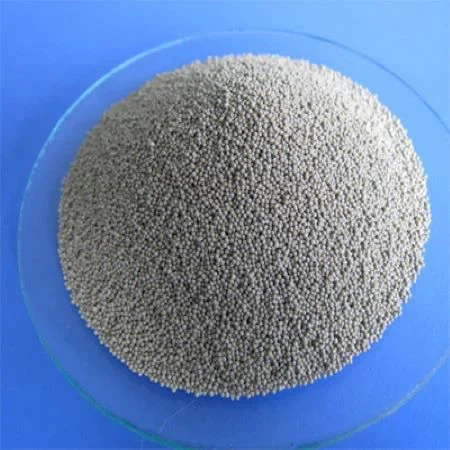

4. Flowability
Flowability is another important factor, especially when it comes to transporting and placing the low density ceramsite. A smooth - surfaced ceramsite generally has better flowability than a rough - surfaced one. This is because the smooth surface reduces the friction between the particles, allowing them to move more freely.
In applications where the ceramsite needs to be pumped into a wellbore or spread evenly over a large area, good flowability is essential. However, if the flowability is too high, the ceramsite may not stay in place as well, which could be a problem in some applications. So, there's a balance to be struck between flowability and other performance factors.
5. Compatibility with Other Materials
When using low density ceramsite in a project, it often needs to be compatible with other materials. The surface texture can affect this compatibility. For example, if the ceramsite is being used in a concrete mix, a rough surface can provide better bonding with the cement paste. This is because the irregularities on the surface allow the cement to penetrate and form a stronger mechanical bond.
On the other hand, if the ceramsite is being used in a fluid - based system, a smooth surface may be more compatible with the fluid, reducing the risk of agglomeration or sedimentation.
Choosing the Right Surface Texture for Your Project
So, how do you choose the right surface texture of low density ceramsite for your project? It really depends on the specific requirements of your application. Here are some things to consider:
- Application Type: If you're in the oil and gas industry, you'll want a ceramsite with a surface texture that maximizes conductivity and mechanical strength. For horticultural applications, a porous surface may be preferred for better water retention and nutrient adsorption.
- Environmental Conditions: Consider the chemical and physical environment in which the ceramsite will be used. If there are high pressures, corrosive fluids, or extreme temperatures, you need a surface texture that can withstand these conditions.
- Processing Requirements: Think about how the ceramsite will be transported, placed, and mixed with other materials. Flowability and compatibility are important factors in this regard.
As a supplier, we understand that every project is unique. That's why we offer a range of low density ceramsite products with different surface textures to meet your specific needs. Whether you're looking for a Sand Proppants or an Oil Proppant, we can help you find the perfect solution.
If you're interested in learning more about our low density ceramsite products or have any questions about how surface texture affects performance, don't hesitate to reach out. We're here to assist you in making the best choice for your project. Contact us today to start a discussion about your procurement needs.
References
- Smith, J. (2018). "The Impact of Proppant Surface Properties on Hydraulic Fracturing Performance". Journal of Petroleum Engineering.
- Johnson, R. (2019). "Mechanical Properties of Lightweight Aggregates and Their Applications". Construction Materials Review.
- Brown, S. (2020). "Chemical Reactivity of Porous Materials in Environmental Remediation". Environmental Science Journal.