

Yo, what's up everyone! I'm a supplier of high strength proppant, and today I wanna talk about how high strength proppant influences the proppant placement in fractures. It's a pretty cool topic that's super important in the oil and gas industry, so let's dive right in.
First off, let's quickly go over what proppants are. Proppants are small particles that are used in hydraulic fracturing, a process where fluid is pumped into the ground at high pressure to create fractures in rock formations. These fractures allow oil and gas to flow more easily to the wellbore. Proppants are then pumped into these fractures to keep them open, acting like little wedges so that the oil and gas can keep flowing.
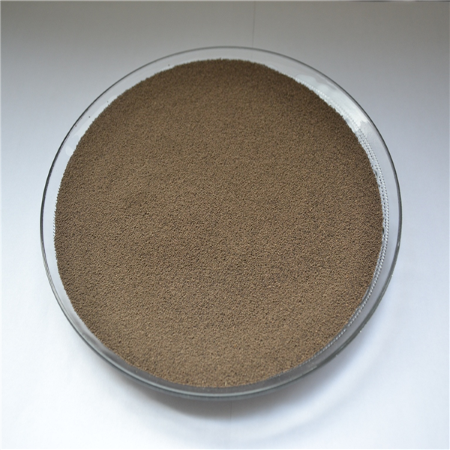
Now, there are different types of proppants out there. One of the popular ones is the Frac Sand Proppant. It's made of natural sand and is relatively cheap. But then we have the High Strength PProppant, which is what I supply. High strength proppants are usually made from ceramic materials and have some unique properties that can really affect how they're placed in fractures.
Density and Its Impact on Placement
One of the key factors that influence proppant placement is density. High strength proppants typically have a higher density compared to frac sand proppants. This higher density means that they tend to settle more quickly in the fracture fluid. When we pump the proppant - laden fluid into the fractures, the high - density high strength proppant will start to sink towards the bottom of the fracture faster.
This can be both a good and a bad thing. On the plus side, it can help create a more concentrated layer of proppant at the bottom of the fracture. This is great because the bottom part of the fracture often experiences more stress, and having a high - strength proppant there can better withstand the pressure and keep the fracture open. However, if the proppant settles too quickly, it might not distribute evenly throughout the entire fracture. We could end up with a situation where the top part of the fracture has very little proppant, which could limit the flow of oil and gas from that area.
To counteract this rapid settling, we can adjust the pumping rate and the viscosity of the fracture fluid. By increasing the pumping rate, we can keep the proppant in suspension for longer, allowing it to spread out more evenly in the fracture. And by increasing the viscosity of the fluid, we can slow down the settling process of the high strength proppant.
Shape and Its Role
The shape of the proppant also plays a big part in how it's placed in fractures. High strength proppants are often more spherical in shape compared to frac sand proppants, which can be more irregular. A spherical shape allows the proppant to roll and move more easily through the fracture. This means that high strength proppants can travel further into the fracture and are less likely to get stuck in narrow passages.
When the proppant can move freely, it has a better chance of filling up all the nooks and crannies in the fracture. This is crucial for maximizing the surface area of the fracture that's propped open, which in turn increases the flow of oil and gas. In contrast, irregular - shaped frac sand proppants might clog up the smaller channels in the fracture, preventing the fluid from flowing smoothly.
Strength and Long - Term Placement
As the name suggests, high strength proppants are, well, strong. They can withstand higher pressures without getting crushed. This is really important for long - term proppant placement. In a fracture, the pressure can change over time as the oil and gas are extracted. If the proppant gets crushed under the pressure, it can turn into a fine powder that can block the flow channels and reduce the permeability of the fracture.
High strength proppants are less likely to suffer from this problem. They can maintain their shape and position in the fracture for a longer time. This means that the fracture stays open, and the oil and gas can continue to flow at a good rate. For example, in deep - well applications where the pressure is extremely high, using a high strength proppant is almost a necessity to ensure that the proppant placement remains effective over the life of the well.
Compatibility with Fracture Fluids
Another aspect to consider is how the high strength proppant interacts with the fracture fluid. The fracture fluid needs to be able to carry the proppant into the fracture and then release it in the right place. High strength proppants should be chemically compatible with the fracture fluid. If there's a chemical reaction between the proppant and the fluid, it could change the properties of both the proppant and the fluid.
For instance, if the proppant reacts with the fluid and forms a sticky substance, it could cause the proppant to clump together. This clumping can lead to uneven proppant placement and even blockages in the pumping system. We need to make sure that the high strength proppant we supply is tested thoroughly to ensure its compatibility with different types of fracture fluids.
Comparison with Frac Sand Proppant
Let's compare high strength proppants with Frac Sand Proppant in terms of placement. Frac sand proppants are lighter and have a more irregular shape. They tend to be more evenly distributed in the fracture because they don't settle as quickly as high strength proppants. But because they're not as strong, they might not be able to withstand high pressures for a long time.
High strength proppants, on the other hand, offer better long - term performance in high - stress environments. Although their placement can be a bit more challenging due to their density, with the right pumping strategies and fluid management, we can achieve good results.

Conclusion
In conclusion, high strength proppants have a significant impact on proppant placement in fractures. Their density, shape, strength, and compatibility with fracture fluids all play important roles in determining how they're distributed in the fracture. While they present some challenges in terms of placement, the benefits they offer in terms of long - term fracture support and high - pressure resistance make them a great choice for many oil and gas operations.
If you're in the oil and gas industry and are looking for a reliable high strength proppant supplier, I'd love to have a chat with you. We've got a great range of high strength proppants that can meet your specific needs. Whether you're working on a shallow well or a deep - sea project, we can help you find the right proppant and develop the best placement strategy. Reach out to start a conversation about your proppant requirements and let's see how we can work together to optimize your oil and gas production.
References
- King, G. E. (2010). Thirty years of gas shale fracturing: What have we learned? SPE Hydraulic Fracturing Technology Conference.
- Economides, M. J., & Nolte, K. G. (2000). Reservoir Stimulation. John Wiley & Sons.
- Guo, B., & Ghalambor, A. (2005). Hydraulic Fracturing in Unconventional Reservoirs. Gulf Professional Publishing.