

In the dynamic landscape of the oil and gas industry, proppants play a pivotal role in enhancing well productivity. As a long - standing sand proppants supplier, I've witnessed firsthand the market's evolution and the rise of various substitutes. In this blog, I'll delve into how these substitutes stack up against sand proppants in terms of performance and cost.
Performance Comparison
Conductivity
One of the most crucial performance metrics for proppants is their ability to maintain high conductivity within the fractures of the reservoir rock. Sand proppants, being a natural and abundant resource, have been the industry standard for a long time. They possess a relatively good conductivity under moderate pressure conditions. When sand grains are packed within the fractures, they create channels through which hydrocarbons can flow back to the wellbore.
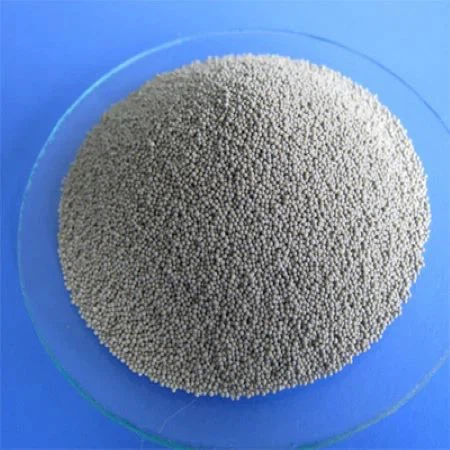
However, some substitutes, such as ceramic proppants, offer superior conductivity, especially under high - pressure environments. Ceramic proppants are engineered to have a more uniform shape and higher crush resistance compared to sand. This means that even under extreme reservoir pressures, they are less likely to deform or break, thus maintaining a more open and efficient flow path for oil and gas. For instance, in deep - well fracturing operations where pressures can exceed 10,000 psi, ceramic proppants may outperform sand proppants in terms of long - term conductivity. You can learn more about different types of proppants at Proppant Oil And Gas.

Suspension and Placement
Another aspect of performance is how well the proppant can be suspended in the fracturing fluid and placed accurately within the fractures. Sand proppants are generally easy to suspend in most fracturing fluids due to their relatively low density. This allows for straightforward pumping operations and good distribution within the fractures.
On the other hand, some substitutes like resin - coated sand or high - density proppants may present challenges in suspension. Resin - coated sand, while offering enhanced crush resistance and better flowback control, can be more difficult to keep in suspension, requiring more sophisticated fracturing fluid formulations. High - density proppants, such as certain types of sintered bauxite, have a higher specific gravity, which means they tend to settle more quickly in the fracturing fluid. This can lead to uneven placement within the fractures and potentially reduce the overall effectiveness of the fracturing job.
Chemical Compatibility
Chemical compatibility with the reservoir fluids and the fracturing fluid is also an important performance factor. Sand proppants are chemically inert in most cases, which makes them compatible with a wide range of fracturing fluids and reservoir conditions. They do not react with the acids, bases, or other chemicals commonly used in the fracturing process, ensuring that the integrity of the proppant pack and the flow channels remains intact.
Some substitutes, however, may have chemical limitations. For example, certain types of synthetic proppants may be sensitive to high - temperature or high - salinity reservoir fluids. In such environments, these proppants may degrade or react with the fluids, leading to a loss of performance over time. This is an important consideration when choosing a proppant for a specific well, as chemical incompatibility can significantly impact the long - term productivity of the well.
Cost Comparison
Material Cost
When it comes to cost, sand proppants have a distinct advantage in terms of material cost. Sand is a widely available natural resource, and the extraction and processing costs are relatively low. This makes sand proppants the most cost - effective option for many oil and gas operators, especially in regions where high - quality sand deposits are easily accessible.
In contrast, substitutes like ceramic proppants and sintered bauxite proppants are more expensive to produce. The manufacturing process for ceramic proppants involves high - temperature sintering, which requires significant energy input and specialized equipment. Sintered bauxite proppants also have high production costs due to the limited availability of high - grade bauxite ore and the complex processing steps. As a result, the per - unit cost of these substitutes can be several times higher than that of sand proppants. You can explore the cost - effective sand proppants at Sand Proppants.
Transportation Cost
Transportation cost is another significant factor in the overall cost of proppants. Sand proppants, being heavy and bulky, can incur high transportation costs, especially if the well site is far from the sand source. The cost of shipping sand over long distances can add up quickly and erode the cost advantage of sand proppants.
Some substitutes, such as low - density ceramic proppants, may have an advantage in terms of transportation cost. Their lower density means that less weight needs to be transported per unit volume, resulting in lower shipping costs. Additionally, if the manufacturing facility for these substitutes is closer to the well site than the sand source, the transportation cost savings can be substantial.
Total Cost of Ownership
When evaluating the cost of proppants, it's important to consider the total cost of ownership, which includes not only the material and transportation costs but also the cost associated with the performance of the proppant. While sand proppants are cheaper upfront, if they result in lower well productivity due to poor conductivity or other performance issues, the overall cost of using sand proppants may be higher in the long run.
For example, if a well using sand proppants has a lower initial production rate and a shorter production life compared to a well using a more expensive but higher - performing substitute, the lost revenue from the lower - performing well can offset the initial cost savings of using sand proppants. Therefore, a comprehensive cost - benefit analysis is necessary to determine the most cost - effective proppant option for a specific well. You can find more information about different oil proppants and their cost - benefit analysis at Oil Proppant.
Conclusion and Call to Action
In conclusion, both sand proppants and their substitutes have their own unique advantages and disadvantages in terms of performance and cost. Sand proppants are cost - effective and have good general - purpose performance, making them a popular choice for many oil and gas operations. However, in certain high - pressure or high - temperature reservoir conditions, substitutes like ceramic proppants may offer superior performance, despite their higher cost.
As a sand proppants supplier, I understand the importance of providing our customers with the right proppant solution based on their specific needs. Whether you are looking for a cost - effective option for a shallow well or a high - performance proppant for a deep - well application, we can help you make an informed decision.
If you are interested in discussing your proppant requirements further or would like to request a quote, please feel free to reach out to us. We are committed to providing high - quality sand proppants and expert advice to help you optimize your oil and gas production.
References
- Economides, M. J., & Nolte, K. G. (2000). Reservoir Stimulation. John Wiley & Sons.
- King, G. E. (2010). Thirty Years of Gas Shale Fracturing: What Have We Learned? Society of Petroleum Engineers.
- Montgomery, S. L., & Smith, C. A. (2010). Shale Gas Reservoirs: A Critical Review. AAPG Bulletin.