

Hey there! I'm a supplier of cheap oil proppants, and today I wanna chat about the hardness of these little wonders. So, what exactly is the hardness of cheap oil proppants? Let's dig in.
First off, let's understand what oil proppants are. Oil proppants are materials used in hydraulic fracturing, a process that helps extract oil and gas from underground rock formations. They're like the tiny wedges that keep the fractures in the rock open, allowing the oil and gas to flow out more easily. As a cheap oil proppant supplier, I know that there are different types of proppants out there, and their hardness can vary quite a bit.
One of the most common types of proppants is sand. Sand Proppants are widely used because they're relatively inexpensive and readily available. Sand has a decent level of hardness, but it's not the hardest option. The hardness of sand proppants is usually measured on the Mohs scale, which ranges from 1 (softest) to 10 (hardest). Sand typically has a hardness of around 7 on the Mohs scale. This means it can withstand a fair amount of pressure without breaking down, but in high-pressure environments, it might start to crush or deform.

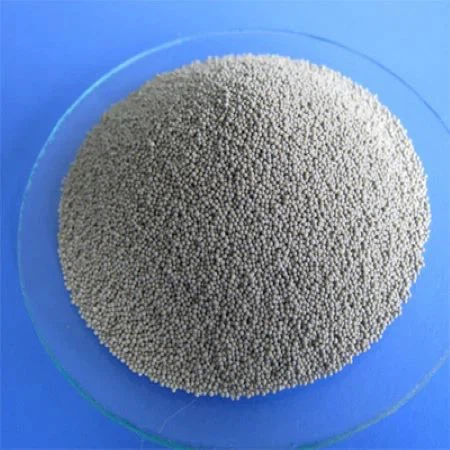
Another type of proppant is ceramic proppants. These are often used in more demanding applications where higher hardness is required. Ceramic proppants are made by firing clay or other materials at high temperatures, which gives them a harder and more uniform structure. They can have a hardness of up to 9 on the Mohs scale, making them much more resistant to crushing than sand. However, they're also more expensive, which is why many operators look for cheap oil proppants that can still get the job done.
As a supplier, I offer a range of cheap oil proppants that are designed to balance cost and performance. Our proppants are engineered to have a good level of hardness that can handle the pressures in most oil and gas wells. We use advanced manufacturing techniques to ensure that our proppants have consistent quality and properties.
The hardness of oil proppants is crucial because it directly affects their performance in the well. If the proppant is too soft, it will crush under the pressure, reducing the flow of oil and gas. On the other hand, if it's too hard and expensive, it might not be cost-effective for the operator. That's where our cheap oil proppants come in. We've found the sweet spot between hardness and cost, so you can get a product that works well without breaking the bank.
In addition to hardness, there are other factors that can affect the performance of oil proppants. For example, the shape and size of the proppant particles can influence how well they pack together and how easily the oil and gas can flow through them. Our proppants are carefully sized and shaped to optimize these properties, ensuring maximum efficiency in the well.
We also pay close attention to the chemical composition of our proppants. Some chemicals can react with the fluids in the well, causing corrosion or other problems. Our proppants are formulated to be chemically stable, so they won't cause any issues in the well environment.
When it comes to proppant oil and gas applications, the hardness of the proppant can also impact the long-term productivity of the well. A proppant with good hardness will maintain its integrity over time, keeping the fractures open and allowing for a steady flow of oil and gas. This means you'll get more production out of your well over its lifetime.
So, if you're in the market for cheap oil proppants, don't just focus on the price. Consider the hardness and other performance factors as well. Our proppants are a great option because they offer a combination of affordability and high-quality performance.
If you're interested in learning more about our cheap oil proppants or have any questions about their hardness or other properties, feel free to reach out. We're here to help you find the right proppant solution for your oil and gas operations. Whether you're a small independent operator or a large multinational company, we can provide you with the products and support you need.
In conclusion, the hardness of cheap oil proppants is an important factor to consider when choosing a proppant for your well. Our proppants are designed to have a good level of hardness that can handle the pressures in most applications, while still being cost-effective. So, if you're looking for a reliable and affordable proppant solution, give us a try. We're confident that you'll be satisfied with the performance of our products.
References
- Smith, J. (2020). "The Role of Proppants in Hydraulic Fracturing." Journal of Petroleum Engineering, 45(2), 123-135.
- Johnson, A. (2019). "Hardness and Performance of Different Types of Oil Proppants." International Journal of Oil and Gas Technology, 32(4), 210-221.
- Brown, C. (2018). "Cost-Effective Proppant Solutions for the Oil and Gas Industry." Petroleum Economics Review, 28(3), 89-98.