

Hey there! I'm a supplier of high strength proppant, and I'm super stoked to chat with you about the quality standards for this awesome product. High strength proppant plays a crucial role in the oil and gas industry, especially in hydraulic fracturing operations. So, let's dive right in and explore what makes a high strength proppant top - notch.
Physical Properties
First off, let's talk about the physical properties. Size and shape are really important. The size of the proppant needs to be consistent. Inconsistent sizes can lead to uneven distribution in the fracture, which can reduce the overall efficiency of the fracturing process. Most of the time, the size is measured in mesh. For high strength proppant, we usually look for a narrow size distribution. This means that the majority of the proppant particles fall within a specific range of mesh sizes. For example, a common size range might be 20 - 40 mesh or 30 - 50 mesh.
The shape of the proppant is also key. Round and spherical proppants are generally preferred. Why? Well, they have better flowability. When the proppant is being pumped into the well during the fracturing process, spherical particles can move more easily through the pipes and into the fractures. They also pack together more efficiently, creating better conductivity. Angular or irregularly shaped proppants might get stuck or create blockages, which is definitely not what we want.
Another important physical property is density. High strength proppants typically have a relatively high density. This is because a higher - density proppant can stay in place better within the fracture. It's less likely to be carried back out of the well with the fluid flow. However, the density can't be too high either. If it's too dense, it can be difficult to pump the proppant into the well. There's a sweet spot that we need to hit to ensure that the proppant can be easily transported and then stay in the fracture to keep it open.
Chemical Composition
The chemical composition of high strength proppant is a big deal. Most high strength proppants are made from materials like ceramics or sintered bauxite. Ceramics are popular because they can be engineered to have specific properties. They can be made strong, resistant to corrosion, and have a good balance of density and size.
The purity of the materials used in the proppant is crucial. Impurities can weaken the proppant and reduce its performance. For example, if there are too many impurities in a ceramic proppant, it might break under the high pressures found in the well. This can lead to the closure of the fractures and a decrease in the well's productivity.
We also need to consider the chemical stability of the proppant. In the harsh environment of an oil or gas well, the proppant needs to be able to withstand the high temperatures, pressures, and the presence of various chemicals in the well fluid. A chemically stable proppant won't react with the well fluid or other substances in the well, which ensures that it maintains its integrity over time.
Mechanical Strength
As the name suggests, high strength is a must - have for high strength proppant. The proppant needs to be able to withstand the high pressures exerted on it in the well. We measure the strength of the proppant using a parameter called crush resistance. This is usually determined by subjecting a sample of the proppant to a specific pressure in a laboratory setting and then measuring the percentage of particles that break or crush.
For high strength proppants, we want a low crush rate. A high - quality proppant might have a crush rate of less than 10% at a certain pressure, say 5000 psi or 10000 psi. If the crush rate is too high, it means that a large number of the proppant particles are breaking under pressure. When the particles break, they turn into smaller pieces that can clog the fractures and reduce the conductivity.
Another aspect of mechanical strength is the ability of the proppant to resist abrasion. During the pumping process and while in the well, the proppant is constantly moving and rubbing against other surfaces. If it's not abrasion - resistant, it can wear down quickly, which again can lead to a decrease in performance.
Conductivity
Conductivity is a measure of how well the proppant allows fluids (oil or gas) to flow through the fractures. A high - quality high strength proppant should have excellent conductivity. This is related to the size, shape, and packing of the proppant particles. As mentioned earlier, round and spherical proppants with a consistent size distribution tend to pack together in a way that creates channels for the fluid to flow through.
The permeability of the proppant - filled fracture is also an important factor. Permeability refers to the ease with which the fluid can flow through the proppant - filled space. A high - permeability proppant will allow the oil or gas to flow more freely from the reservoir to the wellbore, increasing the production rate of the well.
Industry Standards and Certifications
There are several industry standards and certifications that high strength proppant suppliers need to meet. For example, the American Petroleum Institute (API) has set standards for proppants. These standards cover various aspects such as size, shape, crush resistance, and chemical composition. When a proppant meets API standards, it gives the customers confidence that the product is of high quality.
Other certifications might also be relevant depending on the region or the specific requirements of the customer. Some customers might require proppants to meet certain environmental standards, especially if the well is located in an environmentally sensitive area.

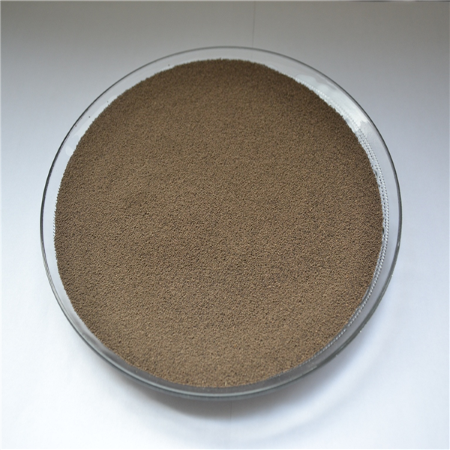
Why Our High Strength Proppant Meets the Standards
As a supplier, we take great pride in ensuring that our High Strength PProppant meets all these quality standards. We use state - of - the - art manufacturing processes to control the size, shape, and chemical composition of our proppants. Our quality control team conducts rigorous testing at every stage of production to ensure that the crush resistance, conductivity, and other important properties are within the desired range.
We also offer a variety of options when it comes to proppant size and density. Whether you need a Frac Sand Proppant for a specific application or a more general - purpose Frac Proppant, we've got you covered.
Let's Connect
If you're in the market for high strength proppant and want a product that meets the highest quality standards, we'd love to hear from you. Whether you're a small - scale operator or a large oil and gas company, we can work with you to find the right proppant solution for your needs. Don't hesitate to reach out for more information or to start a procurement discussion.
References
- American Petroleum Institute (API). Standards for proppants in hydraulic fracturing.
- Various industry research papers on the properties and performance of high strength proppants.