

Hey there! I'm a supplier in the fracturing proppant business, and I'm super stoked to dive into the world of new materials being explored for fracturing proppant production. It's an exciting time in our industry, with all sorts of innovative stuff happening.
First off, let's talk about what fracturing proppants are for those who might not be in the know. Fracturing proppants are tiny particles that are pumped into oil and gas wells during the hydraulic fracturing process. Their main job is to keep the fractures in the rock open, allowing the oil and gas to flow more freely to the wellbore. It's a crucial part of getting the most out of those wells.
Now, the traditional materials for proppants have been things like sand and ceramic. Sand is cheap and readily available, but it has its limitations. It doesn't always have the best strength and conductivity, especially in deeper and more high - pressure wells. Ceramic proppants, on the other hand, are stronger and more durable, but they can be more expensive to produce.
So, what are the new materials that are being explored?
Resin - Coated Sand
Resin - coated sand is one of the cool new options. It's basically sand that has been coated with a thin layer of resin. This resin coating gives the sand some extra properties. For starters, it improves the sand's strength. When the resin cures, it holds the sand grains together better, making it more resistant to crushing under high pressure.
Another advantage is that it can reduce the amount of fines generated. Fines are tiny particles that are created when the proppant breaks down. These fines can clog up the fractures and reduce the flow of oil and gas. With resin - coated sand, the chances of generating fines are lower, which means better conductivity in the well. You can check out more about proppants like these at Oil Proppant.
Bio - Based Proppants
Bio - based proppants are also on the rise. These are made from natural materials like plant fibers, nut shells, and even recycled agricultural waste. One of the biggest advantages of bio - based proppants is that they are more environmentally friendly. In today's world, where there's a lot of focus on sustainability, this is a huge plus.
They can also be cost - effective. Since they are made from waste materials, the raw material costs are often lower. And in terms of performance, some bio - based proppants have shown good strength and conductivity. For example, crushed nut shells can have a porous structure that allows for good fluid flow. It's a win - win situation, both for the environment and for the bottom line.
Nanocomposite Proppants
Nanocomposite proppants are a bit more high - tech. These are made by combining nanoparticles with a matrix material. The nanoparticles can be things like carbon nanotubes or nanoclays. By adding these nanoparticles, the proppant can have enhanced properties.
For instance, carbon nanotubes are incredibly strong, so when they are incorporated into a proppant, they can increase its overall strength. Nanoclays can improve the proppant's ability to withstand high temperatures and pressures. These nanocomposite proppants are still in the research and development phase, but the potential is huge. They could revolutionize the way we produce and use proppants in the future.

Hybrid Proppants
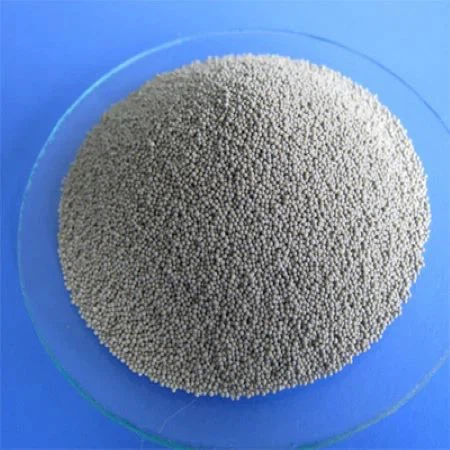
Hybrid proppants are a combination of different materials. For example, you might have a proppant that combines the strength of ceramic with the cost - effectiveness of sand. By mixing and matching different materials, you can create a proppant that has the best of both worlds.
Hybrid proppants can be tailored to specific well conditions. If a well has high pressure but you also want to keep costs down, a hybrid proppant could be the perfect solution. This flexibility is what makes them so appealing to oil and gas companies. You can learn more about different types of proppants used in the oil and gas industry at Proppant Oil And Gas.
Low - Density Proppants
Low - density proppants are another area of exploration. Traditional proppants can be heavy, which makes it difficult to transport them and place them in the well. Low - density proppants are lighter, which means they are easier to handle.
They can also be more effective in some types of wells. In horizontal wells, for example, low - density proppants can be carried further into the fractures by the fracturing fluid. This can lead to better coverage of the fractures and increased oil and gas production. You can find more information about low - density oil proppants at Oil Proppant.
As a fracturing proppant supplier, I'm always on the lookout for these new materials. I want to be able to offer my customers the best options possible. Whether it's a more environmentally friendly bio - based proppant or a high - tech nanocomposite proppant, I believe in staying ahead of the curve.
If you're in the oil and gas industry and are looking for fracturing proppants, I'd love to have a chat with you. We can discuss your specific well conditions and figure out which type of proppant would work best for you. Whether it's one of these new materials or a more traditional option, I've got you covered. So, don't hesitate to reach out and let's start a conversation about your proppant needs.
References
- King, G. E. (2012). The Secrets of Successful Shale Gas Fracturing. Journal of Petroleum Technology, 64(04), 30 - 37.
- Vincent, T. L. (2013). Proppant Selection and Placement for Hydraulic Fracturing. SPE Production & Operations, 28(03), 267 - 277.