

Hey there! As a supplier of stable proppants, I've seen firsthand how the surface property of these little guys can have a huge impact on their behavior. So, let's dive into it and explore how the surface property of stable proppants influences what they do in the oil and gas industry.
First off, what exactly are proppants? Well, in simple terms, proppants are small particles that are used in hydraulic fracturing, or "fracking" for short. When we frack a well, we pump a mixture of water, sand, and chemicals into the ground at high pressure to create fractures in the rock. These fractures allow oil and gas to flow more easily to the wellbore. Proppants are then injected into these fractures to keep them open, like little wedges, so that the oil and gas can continue to flow out.
Now, let's talk about surface properties. The surface of a proppant can be smooth, rough, porous, or have a variety of other characteristics. These properties can affect how the proppant interacts with the surrounding environment, including the fracturing fluid and the rock formation.
One of the key surface properties that affects proppant behavior is wettability. Wettability refers to how well a liquid spreads over a solid surface. In the case of proppants, wettability can influence how the proppant is transported in the fracturing fluid and how it adheres to the fracture walls.
If a proppant has a high degree of hydrophilicity (water-loving), it will tend to disperse well in the aqueous fracturing fluid. This means that it can be more easily transported deep into the fractures. On the other hand, a hydrophobic (water-hating) proppant may clump together in the fluid, which can lead to poor distribution in the fractures.
But it's not just about the transport in the fluid. Wettability also affects how the proppant attaches to the fracture walls. A proppant with good wettability can form a strong bond with the rock, helping to keep the fractures open. This is especially important in high-stress environments where the fractures are under a lot of pressure.
Another important surface property is surface roughness. A rough surface can increase the mechanical interlocking between the proppant particles and the fracture walls. This can enhance the proppant's ability to hold the fractures open, even under high closure stresses. Think of it like Velcro - the rough surface of the proppant creates more "hooks" that can grab onto the rock, making it more stable.
Porous surface properties also play a role. Porous proppants can absorb and release fluids, which can have a significant impact on the flow of oil and gas. For example, a porous proppant can act as a reservoir for the hydrocarbons, allowing them to be stored and then released slowly over time. This can improve the overall production efficiency of the well.
Now, let's take a look at how these surface properties can vary depending on the type of proppant. There are several types of proppants available in the market, including Proppant Oil And Gas, Oil Proppant, and Sand Proppants.
Sand proppants are one of the most commonly used types. They are relatively inexpensive and have a natural rough surface, which can provide good mechanical interlocking. However, their wettability and porosity can vary depending on the source of the sand.
Ceramic proppants, on the other hand, can be engineered to have specific surface properties. They can be made with a smooth or rough surface, and their wettability and porosity can be controlled during the manufacturing process. This allows for more precise optimization of the proppant's behavior in the fractures.
So, why does all of this matter? Well, understanding how the surface properties of stable proppants influence their behavior is crucial for optimizing the hydraulic fracturing process. By choosing the right proppant with the appropriate surface properties, we can improve the efficiency of oil and gas production, reduce costs, and minimize environmental impact.
For example, if we know that a particular well has a high-stress environment, we can choose a proppant with a rough surface to enhance its stability. Or, if we want to improve the flow of oil and gas, we can select a porous proppant that can act as a reservoir.
As a stable proppant supplier, I'm always looking for ways to provide our customers with the best products for their specific needs. That's why we invest a lot of time and resources in researching and developing proppants with optimized surface properties.

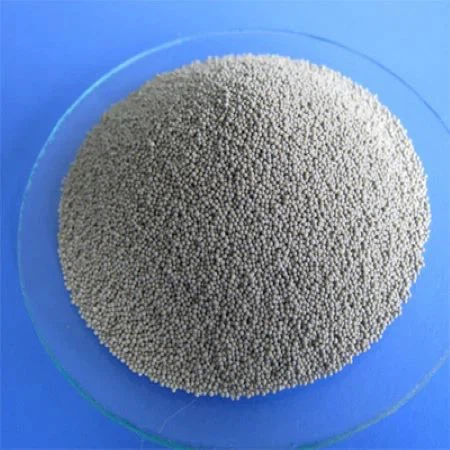
If you're in the oil and gas industry and are looking for high-quality stable proppants, I'd love to have a chat with you. We have a wide range of proppants available, each with unique surface properties that can be tailored to your requirements. Contact us today to start a conversation about how we can help you improve your production efficiency and achieve your goals.
References
- Smith, J. (2018). The Role of Proppant Surface Properties in Hydraulic Fracturing. Journal of Petroleum Technology, 70(3), 22 - 29.
- Johnson, A. (2019). Impact of Proppant Wettability on Oil and Gas Production. International Journal of Energy Research, 43(5), 350 - 362.
- Brown, C. (2020). Porous Proppants: A New Frontier in Hydraulic Fracturing. Energy Exploration & Exploitation, 38(2), 189 - 205.