

In the oil and gas industry, hydraulic fracturing has become a crucial technique for extracting hydrocarbons from unconventional reservoirs. Frac sand proppants play a vital role in this process by keeping the fractures open, allowing the oil and gas to flow more freely to the wellbore. However, the acidic environments often encountered in oil and gas wells can significantly impact the performance of frac sand proppants. As a frac sand proppant supplier, understanding how the corrosion resistance of these proppants affects their use in acidic environments is essential for providing high - quality products to our customers.
The Basics of Frac Sand Proppants and Acidic Environments
Frac sand proppants are typically made of materials such as sand, ceramic, or resin - coated sand. They are injected into the fractures created during the hydraulic fracturing process. In acidic environments, the presence of acids like hydrochloric acid (HCl) and hydrofluoric acid (HF) is common. These acids can be introduced intentionally during well stimulation operations or can occur naturally in the reservoir fluids.
The corrosion resistance of frac sand proppants refers to their ability to withstand the chemical attack of these acids without significant degradation. If a proppant has poor corrosion resistance, it may dissolve, lose its strength, or become chemically altered, which can have a detrimental effect on its ability to prop open the fractures and maintain permeability.
Impact of Poor Corrosion Resistance on Proppant Performance
When a frac sand proppant lacks sufficient corrosion resistance in an acidic environment, several negative consequences can occur. Firstly, the dissolution of the proppant can lead to a reduction in the proppant pack's volume. As the proppant dissolves, the fractures may start to close, reducing the flow path for oil and gas. This results in a decrease in well productivity over time.
Secondly, the chemical alteration of the proppant can change its surface properties. For example, the surface roughness of the proppant may increase, which can cause the proppant particles to agglomerate. Agglomeration can lead to the formation of larger clumps that may block the flow channels in the fractures, further impeding the flow of hydrocarbons.
In addition, the loss of strength due to corrosion can make the proppant more susceptible to crushing under the high pressures present in the reservoir. Once crushed, the proppant fragments can fill the pore spaces in the proppant pack, reducing the permeability and conductivity of the fractures.
Importance of High Corrosion Resistance in Acidic Environments
On the other hand, proppants with high corrosion resistance offer several advantages in acidic environments. They can maintain their physical and chemical properties over a longer period, ensuring that the fractures remain open and conductive. This leads to more stable and consistent well production.
High - corrosion - resistant proppants also reduce the need for frequent well interventions. Since they are less likely to degrade, the well can operate for longer periods without the need for additional proppant placement or acid treatment to restore productivity. This not only saves costs but also reduces the environmental impact associated with well operations.
Factors Affecting the Corrosion Resistance of Frac Sand Proppants
Several factors influence the corrosion resistance of frac sand proppants. The material composition is one of the most critical factors. For example, ceramic proppants generally have better corrosion resistance than natural sand proppants. Ceramics are made of inorganic materials that are more chemically stable and less reactive with acids.
The manufacturing process also plays a role. Proppants that are sintered at high temperatures tend to have a more dense and uniform structure, which can enhance their corrosion resistance. Additionally, the presence of coatings on the proppant surface can provide an extra layer of protection against acid attack. Resin - coated proppants, for instance, can have improved corrosion resistance compared to uncoated proppants.

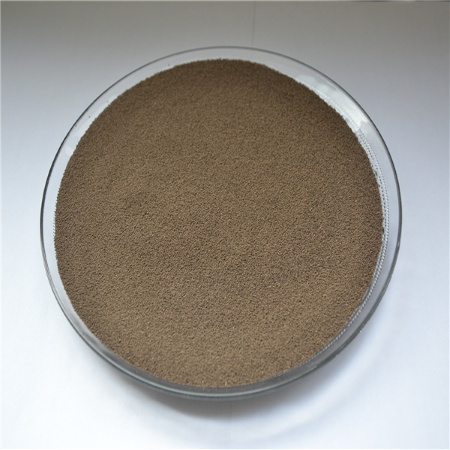
The size and shape of the proppant particles can also affect their corrosion resistance. Smaller particles may have a larger surface - area - to - volume ratio, which can make them more susceptible to corrosion. Irregularly shaped particles may also have areas of stress concentration that can accelerate the corrosion process.
Our High - Quality Frac Sand Proppants with Excellent Corrosion Resistance
As a frac sand proppant supplier, we are committed to providing products with high corrosion resistance. Our High Strength PProppant is a prime example of our dedication to quality. It is made from high - grade ceramic materials and undergoes a rigorous manufacturing process that ensures a dense and uniform structure.
The High Strength PProppant has been tested extensively in acidic environments and has shown excellent corrosion resistance. It can withstand the attack of common acids without significant dissolution or loss of strength. This means that it can maintain its performance in the most challenging reservoir conditions, providing long - term support for the fractures and maximizing well productivity.
Our Frac Proppant also offers a high level of corrosion resistance. It is designed to meet the specific needs of different oil and gas wells, whether they are in shallow or deep reservoirs, and whether they have high or low acid concentrations.
Testing and Quality Assurance
To ensure the corrosion resistance of our frac sand proppants, we conduct a series of tests. We use laboratory - scale acid immersion tests to simulate the acidic environments found in oil and gas wells. In these tests, proppant samples are immersed in acid solutions of different concentrations and temperatures for a specified period. After the immersion, we measure the weight loss, strength, and other physical properties of the proppants to evaluate their corrosion resistance.
We also perform field - scale tests in collaboration with our customers. By using our proppants in actual well operations, we can gather real - world data on their performance in acidic environments. This feedback allows us to continuously improve our products and ensure that they meet the highest standards of quality and performance.
The Role of Corrosion - Resistant Proppants in Sustainable Oil and Gas Production
In addition to their performance benefits, corrosion - resistant frac sand proppants also play a role in sustainable oil and gas production. By reducing the need for frequent well interventions and chemical treatments, they can minimize the environmental impact of well operations. Fewer chemical treatments mean less waste generation and a lower risk of groundwater contamination.
Moreover, the long - term performance of corrosion - resistant proppants can increase the efficiency of oil and gas extraction. This means that more hydrocarbons can be recovered from the reservoir with less energy and resource consumption, contributing to a more sustainable energy future.
Conclusion
The corrosion resistance of frac sand proppants is a critical factor in their use in acidic environments. As a frac sand proppant supplier, we understand the importance of providing high - quality, corrosion - resistant products to our customers. Our High Strength PProppant, High Strength PProppant, and Frac Proppant are designed to withstand the harsh chemical conditions found in oil and gas wells, ensuring optimal well productivity and long - term performance.
If you are in the oil and gas industry and are looking for high - quality frac sand proppants with excellent corrosion resistance, we invite you to contact us for more information and to discuss your specific needs. Our team of experts is ready to assist you in selecting the right proppant for your well operations.
References
- Economides, M. J., & Nolte, K. G. (2000). Reservoir Stimulation. John Wiley & Sons.
- King, G. E. (2010). Thirty Years of Gas Shale Fracturing: What Have We Learned? Society of Petroleum Engineers.
- Sharma, M. M., & Gidley, J. L. (1989). Acidizing Fundamentals. Society of Petroleum Engineers.